Mismatched climate efforts, courage culture, the cultural appropriation of yoga, white identity in post-apartheid South Africa and corporate tax evasion

Written by Jacqueline Courtenay, 8 January 2023


A digest of things seen, read or heard between 1 January – 8 January 2023


Monday: In 2009, at a local library, I stumbled upon the book that first turned me into a climate activist, The Case Against the Global Economy: And for a Turn Towards Localization by Jerry Mander, published in 1997, the contents of this book still remain relevant today. From fostering ideas of how societies across the world can relinquish themselves from dependency on globalised goods and services, to encouraging the rebinding of communities, the book is a toolkit for overcoming the climate crisis. Over a decade on, it doesn’t feel as though we are any closer to reaching those ideals, at least not while the creative accounting escapades of companies mostly multinationals is rife. As told by Bloomberg UK, RECs (Renewable Energy Certificates) and GOs (Guarantees of Origin) are the environmental accounting instruments used to embellish corporate climate progress. Corporate giants are cleverly using said instruments to throw scent off their rather measly climate achievements, just as when everyday person is endlessly being told to decarbonise within an inch of their lives.

Case in point: on the same day that I read this Bloomberg article, BBC Radio 4’s Rethink, steered by, Amol Rajan, had a discussion centred on the personal lifestyle habits we are prepared to give up to stop global warming and questioned why we continue to live the way we do, despite knowing the planet is heating up. Important as this discourse is, with the lens solely on individuals, there is an imbalance if we aren’t talking about the consequences of companies and the state. As an individual, I strive to do my bit for the environment; I haven’t taken a flight in over 7 years, instead of a car, I own an electric cargo bike and am mindful about my households energy and water consumption. Of course, it is right to be reminded about what more we can do but it feels as though the only feet adequately being held to any fire at all are only those of the individual. Comparatively speaking, it seems companies can go on reporting false climate progress with little to show for it and little recourse, which raises the question: will the efforts of the induvial end up in vain? I fear that no government or climate regulatory body is really ready to deal with the climate reporting corruption and for this reason, an Enron-like environmental reporting scandal is likely to be on the horizon.

Tuesday: In “The Dangers of Courage Culture and Why Brene Brown Isn’t For Black Folk” Dr Carey Yazeed, dissects a twitter thread with Dr Jenn M Jackson, a columnist at Teen Vogue, who shared her thoughts on how Brene Brown effectively “encourages white supremacy by telling white women to be courageous and vulnerable”. Yazeed writes that Jackson stated “having courage to finish that swim meet or ask for that big raise isn’t like having the courage to be Black in a country that wants us dead.” Yazeed’s article went on to touch on certain truths and insights about Brene Brown’s writings that I hadn’t contended with until I read it. One the one hand, it confirmed things I know well to be true, such as the claim that “Black women are not supported in the literary space the way white women are. Hence why authors like Brown can become a NYT bestseller over and over again”. As is the idea that white tears is a defensive mechanism that “has worked for centuries, having killed a lot of Black people who were trying to be vulnerable and courageous as they spoke out against the injustices taking place within their lives and communities” But at first, the piece made me baulk with surprise. Surprise at the accusation of white supremacy in relation to Brene Brown’s writings, and so, I was keen to find out if Yazeed and by extension, Jackson had a point. As I read on, particularly where Jackson underscores the high cost of being black in America (which, when gun laws are put aside, isn’t too dissimilar from the experience of being black in Britain), much of what both of the women assessed about Brown’s writings began to ring quite true, on a personal level anyway.

When we are talking about showing courage, I have had to be courageous in ways my non-Black counterparts will probably never be asked to be. I have spoken up about something as sinister, dangerous and frightening as racism at work on numerous occasions and at the highest levels and as a problem that disproportionately affects me, and as a black woman in corporate Britain, it is no surprise then that I have had to pluck up the courage to speak about it disproportionately to others.

The article, an interesting and thought-provoking read though it is, in the end raised questions that I don’t yet have an answer for, such as whether it is fair to characterise Brown’s writings as encouraging white supremacy? And so what if middle class white women like Brene Brown write books and give lectures that don’t speak to our pain, after all, black women are women, and some of it applies to us? As black women, do we have to confine ourselves to reading about our pain all the time? And is it wrong if we compartmentalise our identities at least some of the time? Also, couldn’t we say everything (in the Western world, anyway) is routed in white supremacy? Take The Guardian’s list of 52 acts of kindness: how to spread joy in every week of 2023; from giving blood to walking the dog, none of the acts in the list are safer to do in a black body than in a white one. I can almost guarantee it, but that doesn’t mean the list isn’t for us or should not be consumed by us. The same, I think, goes for the writings of Brene Brown and alike. I mean, unless she comes out and says, “hey my stuff is just for white women, you black women can exit stage left” then there is no reason why we cannot continue to compartmentally consume it. I now believe we must consume works of such authors through a critical black lens so as to manage our expectations and we must, at the same time, do much more to support “the work of lesser known Black authors by purchasing their books and giving them the space to talk about Black vulnerability and courage, while covering and protecting them” just as Dr Yazeed orders.

Wednesday: Yoga and cultural appropriation: “I teach yoga – its appropriation by the white wellness industry is a form of colonialism, but we can move on” written by Nadia Gilani in The Guardian was an enlightening piece that reminded me of an a mostly white mother and baby yoga class I attended with my daughter to back in 2016 when she was just six months old. Sticking out like two sore thumbs and being glared at by (most of) the fellow mums, one of whom moved herself, her baby and her mat as far away from us, ensured that I never set foot in there again. Ironically, Gilani writes about this very cultural appropriation in yoga, that I have partaken in more than just that one time with my baby and much like my white counterparts, I probably haven’t given the historical weight and significance of yoga much thought when doing so.

As with every conversation about cultural appropriation though, at first sight, I thought, well isn’t this just white people enjoying something, should they be demonised for taking it too far? Couldn’t some of it be quite innocent, as I feel it has been when I’ve done yoga? Perhaps my cultural appropriation radar isn’t the strongest, or maybe I’m getting soft in my old age, but if non-white people label everything white people decide to enjoy, that isn’t theirs, as some form of neo-colonialism, then aren’t we running the risk of being accused the same for all manner of behaviours? For example, non-white women dye their hair blonde or wear blue contacts all the time, is that a cultural appropriation of white beauty? And is being dressed in tartan kilts culturally appropriating Scottish culture? Or are we absolved of cultural appropriation because we aren’t white? For this reason, because I wanted to understand more, I kept reading on, hoping the piece would clarify why the cultural appropriation of yoga, propelled by “western economic forces”, is a bad thing. What is it, really, when it comes to cultural appropriation do we have a problem with?

To answer that question, I can say, that what I inherently understand is that much of the conversation is about self-awareness and optics or alack thereof. One could say that, white people who take it a bit far when partaking in activities that originate outside of Europe such as yoga, are somewhat uncaring about whether they might come across as bastardising an ancient practice by wearing a “namaste-as-fuck” T-shirt whilst doing it. This is also a conversation about ownership right? Right. So we ought to be clear and get to the point. Essentially, when we see cultural appropriation in action, we should defend what is ours a bit more and not let it be so cheaply and easily co-opted. In that vein, shouldn’t British-Indians ought to set up their own yoga centres and chartered institutions of yoga? As a British Ghanaian, I probably ought to set up a fully-stocked traditional wedding concierge service catering for all trad wedding needs before any non-British Ghanaian does! Gilani’s article has better informed me about how much the conversation does need to move on. We have identified that thing white people in the West do, we clocked this years ago, so what are we going to do about it? Eventually, I hope we get to a point where we can establish what the phenomenon really says about who is truly creative, who are the originators of cool are and who is responsible for taste making. Until then, here’s hoping.

Thursday: Looking through African Affairs, a top-ranked journal in African Studies published on behalf of the Royal African Society, I found a free 2012 journal article about whiteness in South Africa, which after reading I experienced a raft of emotions, from which I am still reeling days on. An interesting yet uncomfortable read: Whiteness, racism, and Afrikaner identity in post-apartheid South Africa.

Friday: Earlier in the week I was very surprised to learn, from one of the many podcasts I listen to that, global poverty, rather than decreasing, is on the rise! On Friday I was reminded of some of the reasons why when taking a module on the prevention and detection of tax evasion, which opened with a clear and concise statement about the perils of the practice: “tax evasion creates poverty and robs public services of much-needed funding. It also places an unfair burden on honest taxpayers.” But how big is the problem the module went on to ask?

Well, if you must know, the country with the highest level of tax evasion is the US as “it is estimated that the tax lost is over $337 billion dollars every year. The countries with the largest absolute levels of evasion are (in order of tax lost): US, Brazil, Italy, Russia, Germany, France, Japan, China, UK and Spain” (Tax Justice Network, 2019). Unsatisfied, I went on to do some further reading after taking the module, I found that “the UK with its corporate tax haven network is by far the world’s greatest enabler of corporate tax avoidance and has single-handedly done the most to break down the global corporate tax system, accounting for over a third of the world’s corporate tax avoidance risks as measured by the Corporate Tax Haven Index”. Surprising, isn’t it? Considering the UK ranks 13th on the index! Thanks to “its Overseas Territories and Crown Dependencies dominate the top of index. The British Virgin Islands, Bermuda, the Cayman Islands and Jersey ranked 1st, 2nd, 3rd and 7th respectively. Bahamas, a British Commonwealth territory, ranks in 9th”. With such hefty contributions to corporate tax evasion, this is just another way in which the West is at fault for so much of the global poverty we see today.

As Alex Cobham, chief executive at the Tax Justice Network says, “line their own pockets at the expense of a crucial funding stream for sustainable human progress. The ability of governments across the world to tax multinational corporations in order to pay teachers’ wages, build hospitals and ensure a level playing field for local businesses has been deliberately and ruthlessly undermined.”

Thank you for reading. Leave a comment below, if you want.
Leave a comment

Reflections on George Floyd 2020: Marking two years on

Written by Jacqueline Courtenay, 25 May 2022

The following account covers the period of May 2020 - December 2020, and is written solely from the perspective of Jacqueline Courtenay.

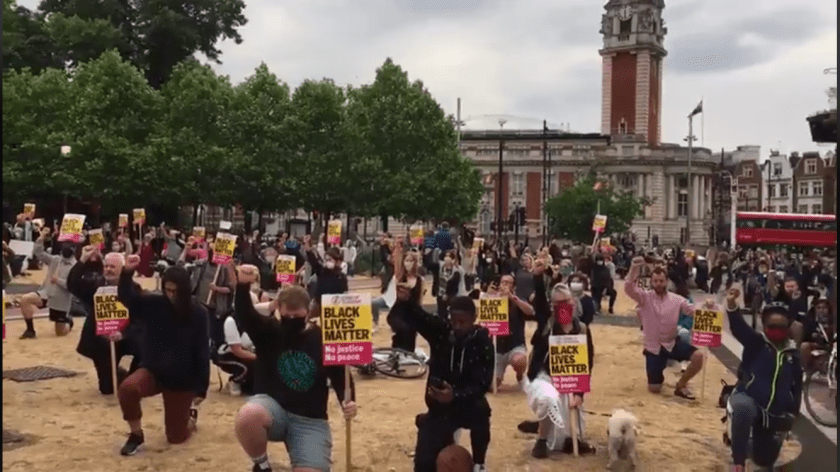
Today marks two years since the shockingly appalling killing of an unarmed black man named George Floyd by white police officer, Derek Chauvin on 25th May 2020. George Floyd. A name, we all now know well. His unlawful murder sent shockwaves across the world. In the days, weeks and even months that followed, protests took place in the name of anti-racism, people took to the streets and demanded change with their feet. Some of us marched. Some of us rallied. Some of us bent a knee. Our media coverage was awash with hand-written banners stating epithets such as “Black Lives Matter” and “silence = violence”. From Minnesota to Myanmar, the death of George Floyd in the summer of 2020 created a ripple effect of one international rally against racist police brutality after another. The killing of George Floyd forced everyone to talk about race.

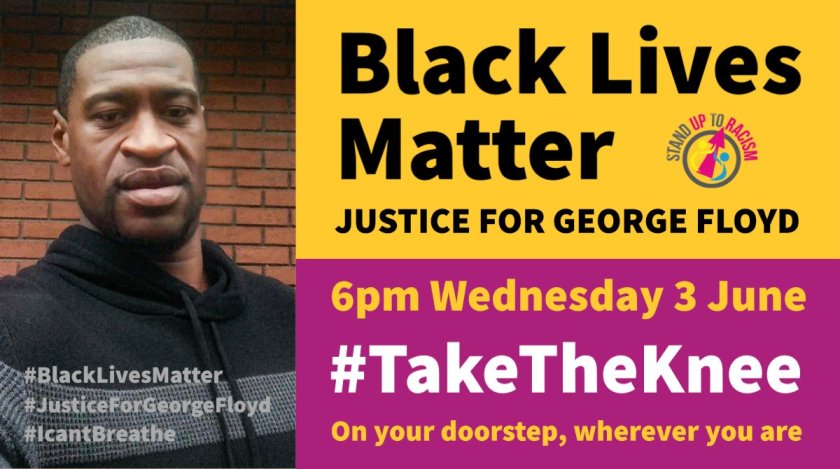
“Black Lives Matter – Justice for George Floyd” – An e-flyer from June 2020 – Stand Up To Racism

On this second anniversary, I would like to share my account of what went on at my workplace (which will be referred to as “my Workplace” from here on) in the days following the killing of George Floyd and how, I, as the then co-chair of the internal Black affinity network (which will be referred to as “the Network” from here on) contributed to the various initiatives that arose in the aftermath.

Listening Sessions

Within a few days of George Floyd’s killing, the Network quickly sprang into action. We organised a listening session to provide support to fellow Black colleagues as we all processed the situation unfolding in America. The session, attended by over 100 colleagues, became the first of many moving listening sessions held throughout the summer of 2020 at my Workplace.

In the weeks that followed, I was invited to open several listening sessions. I supported the Head of a department with an entity-wide employee listening session, which saw Black colleagues as well as allies use the space to reflect, share and listen. I was also invited by several business area heads to share my experiences with their teams.

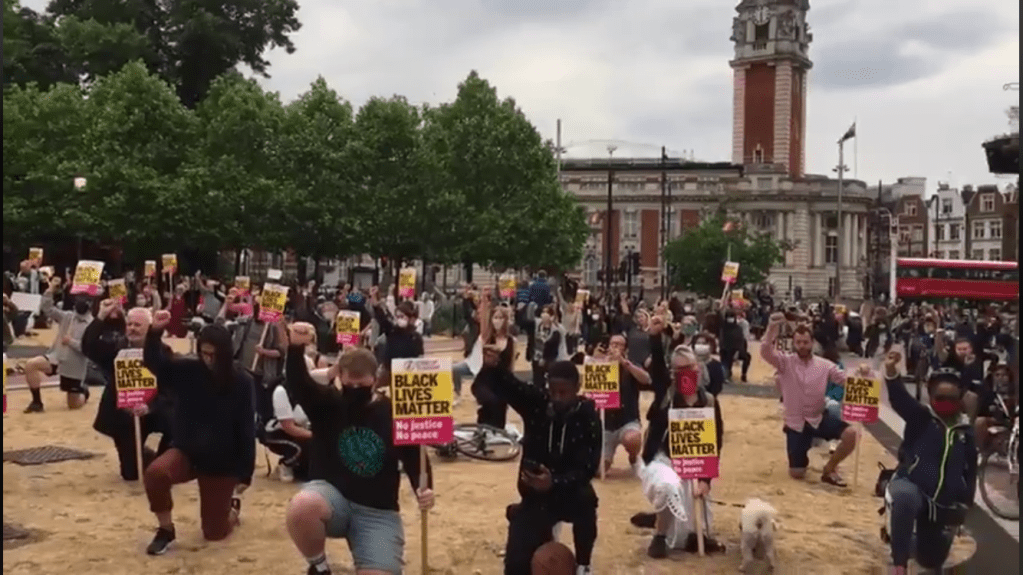
Brixton Black Lives Matter Rally 2020 – photo credit: unknown

Throughout the course of these listening sessions, the pandemic was raging on and I was in the early stages of a pregnancy. Now, as anyone who works in midwifery knows, high emotion is the last thing a pregnant woman needs. Nonetheless, like many black people who work in predominantly white spaces, I became hyper-visible at this time and on several occasions, as a network lead, I was thrust into the spotlight to deliver incredibly emotional accounts of my experiences as a black person and black professional. Could I have declined? Yes, absolutely but I said yes to these invitations because deep down I felt that the summer of 2020 was a one time only event – in that, in terms of the workplace, there would probably never again be a chance to talk about race in the same open and honest way. Two years on, the appetite for talking about race has dwindled, so I think I was right to say yes. I am glad I overcame the nervousness of facing predominantly white colleagues and divulging to them my inner most thoughts on and experiences of racism. As much as I agree with Reni Eddo-Lodge’s book, in the aftermath of George Floyd’s murder, it was indeed time to talk to white people about race.

The most visible of these listening sessions was when I was asked to address the global HR team about my experiences of race and racism in the workplace. I have included the transcript of this speech at the end of this post.

Influencing the Race Action Plan

Going back to the week after George Floyd was murdered, the office of my Workplace’s CEO contacted me and my then fellow Network co-chair inviting us to meet with him. The aim was to discuss what Black colleagues needed at that time and when we met on June 8th, 2020, we used the opportunity to stress the importance of not only issuing a statement acknowledging the killing and the impact it may have had on Black colleagues, but also the importance of seriously tackling race at work.

On June 10th, 2020, taking on board many of the points we raised, the CEO published a powerful statement including a 6-point action plan for tackling racial inequality in the workplace. This meeting became the first of several open, honest, and frank discussions between the Network leadership team and my Workplace’s most senior leadership about race and race equality.

On this second anniversary of George Floyd’s murder, I’d like to direct my focus on key decision makers, senior leaders, and middle management at my Workplace and indeed at all other organisations who pledged to do more and to do better back in 2020.

I hope we will all renew our efforts in acting against racism and bias in our workplaces and will once again, place a serious focus on action. To conclude my reflection on the monumental summer of 2020, please see below the transcript of my speech to my Workplace’s global HR team.


Listening Session, Thursday 2 July 2020

Transcript of Jacqueline Courtenay’s address to the global HR team via Zoom

Hello, so I have just a few minutes to share my experience as a black person. Please note what I share might feel shocking or come across quite strong, but it is only meant to provoke thought and stimulate discussions as we all try navigating and working through things at this time.

So, telling you what it’s like, for me, that means:

 – Telling you that whilst I wear a smile professionally, I live in fear even though to many people, the black experience isn’t that bad, it’s not like we’re slaves anymore is it? And whilst I’d love to agree wholeheartedly, the true things are still quite terrible for people like me. 

 – It means sharing another fear of mine. How I worry endlessly about my younger brother who at 19 and with about 10 years between us, he towers over me and due to his tallness to some with prejudices he may seem imposing as a young black man. How I fear for him whenever he goes out simply because there is a high chance, he might run into a prejudiced person who sees a threat in his colour before seeing the humanity or worse still a police officer who assumes he looks like every other IC3 male. I fear this because there’s a massive chance that the quiet, caring, non-swearing, non-alcohol drinking, comic-book loving, skilled artist and prospective architectural student, who spoke at my wedding and brought tears to everyone’s eyes with his moving wise words won’t be seen as anything but black and male and therefore a threat.

– It means telling you about my mum who routinely faced what we now call microaggressions in the early 90s, when she worked in healthcare and the specific time, she was ushered into a backroom along with all the other black members of staff and kept in there whilst a news team came to their ward and spoke with the white members of staff.

 – It means telling you the white colleague who was pleased I had changed my surname after getting married because my Ghanaian maiden name was too long for her to keep typing out in emails. 

 – It means telling you about the time when how not one but two, smiling white women after observing my daughter for a while, approached me and stressed how lucky I am for having a mixed race daughter with loose curly hair, resembling the European hair of her father more of mine African – then I could share how my stomach tightened as they pointed to their own – half white, half black, mixed race kids with a look of disappointment, indicating they hadn’t been as fortune. Did they realise how offensive that was to me, given the connection I shared with their kids?

 – It means delving into my early childhood, a time in primary school, during lunchtime when a 6-year-old me was told by my white classmate [name redacted], why I don’t go back to where I came from. Realising that early on that I couldn’t make off-the cuff remarks about the cold weather, because I was different. She told me that I should be happy to be here or leave if I was going to complain. Sounds like a prequel to Brexit if you ask me.

 – It means I could tell you about a speech I wrote in year 9, entitled ‘what is in a word’ detailing how I felt about the word ‘black’ a word which as an adjective it represents tragedy, disaster, calamity, ruin, darkness, and dirtiness, I could tell you how gutting it felt to me at 14 to realise that in comparison, whiteness signifies, purity, lightness, and innocence. I could tell you how to this day I grimace, knowing how Africans came to be called Black, how Europeans who coined the term, used it as a tool for division and rule. 

I’ve shared all these things, to appeal to you as human beings, to help you understand how it feels to be black. I’d like you to ask yourselves; in light, of all that has happened since the killing of George Floyd, what have you learned about the experience of blackness and the negative treatment of black people in our world? Considering our CEOs fantastic statement, do you personally intend to do differently to change things in our workplace?

I ask this because we’ve all been watching as the Black Lives Matter movement has moved into the mainstream, which as a result we’ve seen some symbolic changes. Whilst symbols matter, people aren’t marching streets to change the cover of Uncle Ben’s rice packaging, what we’re really asking for is deep institutional change and letting go of the biases we inherit. And so, another question for you is, considering the statement from our CEO, do you think we will see change in this institution?

We are all privileged to work under the leadership of our CEO, a financial markets heavyweight, who isn’t afraid to tackle racism and I’m proud he even calls it that than using some other convoluted term. He’s bold. But not just that, as an organisation we’ve done great work. We have established a Black Employee Network. We’ve got policies to tackle discrimination. We’ve got a whistleblowing policy to make it easier for people to come forward. We’ve reviewed hiring practices to reduce bias. We’ve got unconscious bias training, there’s still something else. There’s still something missing. In some places, anonymous CVs are used to curb name-based racism. Perhaps we should do that. But what we also haven’t done is have sticky, uncomfortable conversations about how the external environment impacts what goes on here and pushes against our internal efforts to bring about change. Hopefully conversations like this, which I commend (name redacted) for initiating, will help move the conversation forward.

Perhaps we need to openly discuss how it is that the city got its wealth. Perhaps we still need to understand why racism still lives in the hearts and minds of so many. Perhaps we still need to talk openly about the fact that the British taxpayer only finished paying government debt in 2015, that was established over 200 years ago to compensate British slave owners who had lost earnings after slavery was abolished. Perhaps we need to speak openly about the private-school-to-private sector pipeline that distorts the true reflection of London in City firms. Perhaps we need to investigate why it is that across the City firms HR teams’ band the words “diversity”, “inclusion” and “unconscious bias” around but all too often these same teams do not embody or represent the diversity in their own teams. Perhaps we should talk about how deeply ingrained all of this is when we see how the Home Office treats black people, that the Windrush scandal wouldn’t have happened to the French-British community but happened very easily, very quietly and very routinely to British-Caribbean’s and British-Africans. Until we’ve confronted these truths and renounced the reprehensible actions of the past and present, ask yourself, will anything change?

Not to seem pessimistic but my hopes aren’t that high in truth, and why is that? Well because, race is configured very strategically in the UK. British racial affairs until recently, all took place abroad. Instead of going to watch the latest lynching’s as people did in early 20th century America, comparatively British people were oblivious to the screams of slaves being lashed or dipped into boiling liquor until their skin peeled off or had boiling water poured down their throats by British slave owners, like Arthur William Hodge, because none of this happened on British soil. It happened in the West Indies. And instead of hearing about this violence in the British Caribbean or the brutal colonialism that rampaged through Ghana where my family come from, British people of the early 20th century instead heard about the salvation British missionaries brought through God’s word, to the ‘savage’ West coast of Africa. Our civil rights movements even happened abroad, run by men like Kwame Nkrumah in Ghana fighting for independence from the British. It makes sense then why to many people, the matter of race has nothing to do with Britain. But Afua Hirsch told us when she spoke in our theatre last year (i.e., 2019) about the mills, still standing in picturesque English towns and their direct links to British slavery. We haven’t spoken about any of this not as a society and not as an organisation, it is still the elephant in the room. But it matters, race has everything to do with the UK and as British brand with a rich history, race needs to matter to our Workplace.

We don’t all come to this with the same knowledge or understanding, but at a very foundational level, when it comes to the diversity we have in the city of London: we are here, because you were there. Black people in the UK are descendants of colonialism. But if you didn’t know that you were there, you will find what I’m saying confusing. I mean I was born here, went to school here, went through the same curriculum which failed to teach any of us the details of how Britain became Great. But being black means that because racism and hostility greet you in day-to-day life, you find yourself pouring into the historical texts, exploring the histories to centre you, to bring some meaning to all the injustices you face. If you aren’t black, I get why doing that may not seem so pressing to you. It’s just like having an injury, unless you’ve experienced that same injury, you may never understand the depths of that pain though you may sympathise.

The failure to educate us about race at school, has done us all a huge disservice. But learning isn’t just for the young, life is a teacher as my mum says, and learning is lifelong. So, it is vital that you join the conversation. It is vital that we learn the true stories of British empire and imperial rule, it is vital that we come to terms with it, that we aren’t too quick to defend the 500-year system by jumping to say, “but we abolished slavery!”

Whilst I am happy about the statement from our CEO recently and hopeful, on a societal level I am mostly weary and sceptical about how genuine this moment of change is, because none of what I’ve said is new, none of what we’ve seen in the George Floyd case is new, the history is not new, it’s there. What is new is, to quote the writer Gary Younge, “this time it’s multiracial, it’s young, and it’s global”. It’s playing out in different places and so it feels like change is in motion. It’s just up to individuals in positions of power, like yourselves in HR, to choose to pick up the baton because this is a marathon. But if you think we have done enough, if you think all this chat about race is redundant, tired and unnecessary, if you think the work is done, if you think there are no wrongs to right, then in the words of white American educator, Jane Elliot, my last question for you is: please raise your hand or unmute yourself and say ‘yes’ if you think things are in such good a position that you would like Black people in our workplace, in our industry and in our world are treated?

End

Thanks for reading.

Leave a comment

Why I am a working mum & the women who told me doing both was possible

Written by Jacqueline Courtenay, 22 May 2022


So many people help us along the way, however because so much happens in life, oftentimes it is easy to forget or even misremember exactly how we come to make the decisions we make. We forget the small drops and pearls of wisdom that cause ripple effects in our lives. We all too often fail to recall how something triggered another thing which in turn led to whatever it was that eventually got us to where we are stood today. Not all of it may seem significant but in actual fact, even the seemingly little, brief and fleeting influences are all important aspects of our journey towards achieving our goals. In this blog post, it is in this vein that I would like to share a little story from almost a decade ago. As now a fully-fledged, full-time working mother of three, I reflect on one of the moments which helped cement this decision, reinforce this call and underpin this vocation of unapologetically doing both. I am looking back to one particular day almost ten years ago to share a brief story about how attending a seemingly immaterial event assisted in cultivating my entire approach to working motherhood.


I am 21 years old, the year is 2013 and it is an overcast Saturday afternoon one day late in March. At that time, I live in my hometown Islington with my mum and my younger sibling. I am also a few months shy off graduating from university, after which point I have set my sights on studying law. I have an offer to study at City Law School later in the year, and I am determined to soak up as much information about entering, working and thriving in the Law as possible. As 1pm approaches, I am hurriedly getting ready to head out to a workshop entitled ‘Get YOU ahead in Law’[i] which is being held at Birkbeck university, and is organised by Sonia Meggie through her incredible organisation, Inspirational YOU. I am running late for the talk which starts at 2pm and as a then budding law student, I am desperate not to miss out on hearing from the four successful lawyers as billed on the Eventbrite page. Back then, I made a point to attend as many such masterclasses and networking events as possible to hear from industry trendsetters, pioneers and trailblazers. And as a student who undertook ten internships, work placements and volunteering roles, collecting business cards was a treasured hobby.

At around 1:30pm, I jump on the 91 bus from Caledonian Road, to Kings Cross, then up Euston Road before it sedately arrives at Russell Square just minutes before 2pm, where I alight. I walk through the heart of the University of London Bloomsbury Campus Area before entering Birkbeck University’s Torrington Square building, making it just in time. Upon entering the lecture room, I present my ticket to the Inspirational YOU staff and then take my seat. I also take in the breath-taking view of the four panellists on stage – all women and all leading lawyers.

For context, the panellists (and the positions they held at the time) were: Laurie-Anne Power, Barrister; Miranda Brawn Legal Counsel at Citi Bank & former banker; Julia Furley, Barrister & Partner; and Elizabeth Nolan Solicitor & Head of Employment Law

Be Inspired 2 Empowering workshops and inspirational talks for all14:00pm: How to get into law and succeed  Inspirational YOU – Be Inspired – Series 2Birkbeck, Torrington Square, London, WC1 7HX Saturday 23rd March 2013 From 12:00pm – 7.00pm
IY Be Inspired 2 – Saturday 23rd March 2013 – Birkbeck, University of London

The host Garry Green, Barrister at Tooks Chambers, kicks things off and from there the we hear from each panellist. With the topic of the talk being getting ahead in law, I was expecting to hear about the intricacies of getting into the profession, and was hoping to pick up some gems about routes into law and how to make a great first impression in interviews. As the talk went on I realised it was about having a far more in-depth conversation. I listened intently as the panellists shared not only their insights into law and their journeys into the profession, but also the obstacles they faced within it. Throughout the talk there was an air of “you can make it”, regardless of the status quo or the conventional way. Each panellist shared their career highlights, their lows and what had been required of them to succeed in a still male-dominated career. It was inspiring to hear successful women of differing cultural and demographic backgrounds share their commonality in coming from humble beginnings and moving into a profession widely known for its high barriers to entry, its reluctance to include minorities and women and its preference to permit access to the elite.


I pause here to say that, it has been almost a decade since this talk took place and fortunately in that time, many efforts have been made to diversify the make-up of legal professionals. Things are slowly improving. A welcomed transformation.


It was altogether an incredibly heartening talk to take in but why it has elevated into a standout moment of my coming age story and a moment that has been seared into my memory is because the conversation unexpectedly moved into how motherhood and relationships intersects with work. Until then, most of the masterclasses I had been attending throughout my time as a student were formulaic in their approach discussing matters of work as if there were little to no connection between work and social life. However, in this talk the panellists generously shared candidly advice about how their romantic relationships and decisions had impacted their careers, and this was incredibly refreshing to hear.

Some shared their regrets about pursuing careers and abandoning their love lives, because of the fear of needing to commit to their work. This is a well-known experience and is a theme that has blighted the careers of working women for years and continues to hinder our ability to not only break the glass ceiling but to remove it altogether. Others inspiringly shared how becoming mothers at a young age, before university, had not deterred them from starting a career in law nor had having more children since.

By the end of the talk, the host opened up the floor to questions. Now, anyone who knows me (and knows me well) will tell you that I love asking questions: good, solid, thought-provoking questions. If you were to ask me what my personal values are, asking questions would easily make it into the top three! I ask questions for four main reasons: it is in my nature to do so, it helps build emotional intelligence, it is an effective way to communicate and connect with others, and finally because I am always seeking to learn and gain more information. There is also a fifth reason: I love to talk, and what better way to talk than through the art of asking good questions?

As soon as Garry Green turned to the audience for questions, I shot up my hand. I had a burning question and surprisingly to me, it wasn’t the sort of question I thought I would be asking when I was rushing my way to the talk earlier on that afternoon. As I made my way to the event, all that was on my mind was law, training contracts, pupillages, vacation schemes etc., nothing about relationships and their impact on work were on my mind. I believed that such a topic was reserved for the kitchen table. But by the time it was my turn to hold the mic, I stood up and found myself thanking the panellists for being so open and honest about their experiences and asking, with respect to relationships and work, what advice they would give to their 21 year old selves?

It is the responses to this question that have inspired me to look back on this small moment in such great detail and discuss how from the moment that “advice for your 21 year old self” question was answered, my approach to working life changed forever.

I received several responses, all of which were something to the effect of: “Avoid regrets by doing both. You can do both”. In fact, one response in particular, was almost exactly that!

Another said, “if you meet a nice young man don’t let him go because you want to focus on your career, you can have both!” The audience chuckled, as one panellist said something like if I met a young man who couldn’t handle that, then he wasn’t worth pursuing.

I remember going home, telling my mum all about it. To my surprise, she was in complete agreement. Of course she was, whilst not in the ways she planned, she has been a working mother herself. She has always been driven and strived to get things done and I have always been inspired by that example. Perhaps, because of this, I was always destined for working motherhood in the way I am doing it now anyway, but I believe that my upbringing coupled with this unique experience of having several thriving women in the Legal world imploring me to believe that both can co-exist, has played a key role in shaping the working mother I am. Ever since that talk I have been an advocate for doing both and as I practice it now, I believe that it is not a myth and one does not have to give for the other. I truly believe that we can have it all, but I can see also why, sometimes, some of us cannot and much more work must be done to ensure that all mothers can live in a way that their work and parental responsibilities co-exist harmoniously .

A year later when I met my now husband, I told him about how these women had inspired me to be a working mum one day. Early on in our relationship, I made a point of sharing this with him – I won’t say whether my aim was to see if it would scare him off or not but I will say this: it was a very nerve-wracking thing to do. When you’re dating it isn’t typically the “done thing” to lay your cards on the table and say this is who I am, this is what I want to do with my life and if you’re not on it, well then, bye-bye! I honestly thought he’d run a mile and I told myself that if my ambition of being a full-time working mother, who shares the load equally with her partner sent him flying, then I’d know whether he was the One for me, not that I am much of a believer in the One but I digress. Surprisingly, he was on the same page. Coming from a two-parent household where both his parents worked full-time for most of his childhood, he wasn’t some millennial cave man who expected his partner to stay home with the kids. Something about working parenthood resonated with him almost as much as it had resonated with me. In one of our earliest conversations, we talked about splitting the pick-ups and everything else. Nearly a decade together and three children later, supporting one another in parenthood and working lives, is something we practice each day.

I am so glad we talked about who would do what and just how working parenthood would work, early on in our relationship because whether I am supposed to say this or not: male partners play a crucial role in the success of their female partners. You know the saying, “behind every great man, there is an even greater woman”? Well, I’d go so far as to say, “behind every successful working mother, is a supportive working father who wills her to earn her own living”. I strongly believe that successful working mothers, specifically those like me in heterosexual unions are only as successful as their male partners support them to be. A male partner who is not fully in support of his female partner is not one who is going to help her dedicate herself as much to her career as to their home life, by taking an equal share in the duties of being an equally present parent and sharing in the running of the household.

And so, as we continue to demand equality in the workplace, I am hopeful that more and more women will continue to demand equality in their households, because the key to successful working motherhood is in having an equal balance in both our romantic and working lives without fear that doing so can hinder your career.

I thank the women who shared this piece of advice with me on that day in March 2013. Thanks for letting me know that when it comes to work and motherhood, that doing both is possible.

Sources:

[i] Get YOU Ahead in law, Inspirational YOU, 2013

[ii] Bloomsbury Campus Area Policy brief, Camden Council, 2020

Thank you for reading. Leave a comment below. LIKE. FOLLOW. SUBSCRIBE.

For expectant working mothers, here is the truth about maternity leave covers

Written by Jacqueline Courtenay, 20 January 2022


Perhaps you are about to go on maternity leave, your workplace is probably making plans to find someone to cover your role. What does this process invovle? What is required of you? How will you ensure continuity during your time off? Well, in this post I attempt to discuss the highs, the lows, the fears, the preparations, the gratitude and the frantic emotions that come with having someone cover your role (for up to a year) whilst you are on maternity leave undertaking a new job altogether.


Photo by Pixabay on Pexels.com

Introduction

Having worked in HR and Recruitment before, I know that finding maternity leave cover can be a time-consuming, time-pressured and challenging task. Seemingly, it is a task that rests squarely on the shoulders of an employer, more specifically the person in charge of the team. In my case(s), incredibly (perhaps slightly unfortunately too) it has been the sole responsibility of one person: the head of my team. He has been in the unique position of having to find multiple people to cover my role three times over in the past five years, as well as that of three other women in our team! I am very grateful to him for this, especially for never making me feel like a burden because of my family planning choices. As a father himself, he has also been understanding about my flexible working requests, which have altered after the arrival of each baby. I feel incredibly lucky to have been in his team throughout this stage of my career.
 
Nevertheless the “finding-maternity-leave-cover” process is a lot more than recruitment and is not just a burden the heads of teams carry. There is much by way of handover that expectant mothers are required to do for the benefit of smooth transition, continuity and efficiency that almost goes under the radar. And in this post I’d like to uncover some of the lesser known aspects of preparing for maternity leave.

Photo by Pixabay on Pexels.com

THE PREP

For two of my maternity leaves, for the purposes of handover, I too have had to play a key role in making sure those taking over from me have as seamless and as efficient as possible a handover from which to undertake the duties of the role. How have the days and weeks prior to maternity leave looked for me? Everything from making tutorial videos via Teams with the help of Apple’s iMovie app to creating multiple procedural documents and working with IT Support teams to ensure access to all folders and drives were available. As well as having to essentially train my maternity leave covers and ready them for my job before my due dates. It wouldn’t be incorrect to say that this preparation was driven by a lingering fear that any bad performance of theirs would be a bad reflection on me! So, if you or someone you know is about to go off on maternity leave, here’s a reminder: handover is a big deal and contrary to popular belief, there is a lot more to worry about than just having looking forward to having “some time off”.
 
This is why, I feel it is entirely wrong that maternity leave is so commonly seen as mere time off or time to put your feet up, whilst your work gets done for you. At the most crucial (and heaviest) times of my pregnancies, it has not been my impending labour, sense of dread and doom or my half-packed hospital bag that I have been most concerned about. It has always been my job that has taken centre stage in my mind. Principally how it would be done in my absence. This is why I believe we need to demystify working motherhood and rebuke ideas that mothers-to-be become selfishly unconcerned with their careers as soon as they get pregnant. It is such a falsehood that can have a damaging impact on young women who out of fear of such stigmatisation delay and put off motherhood.
 
Preparing for a maternity leave for me, has involved agonising about the best possible ways to handover my work. For the last of them, we were all in the midst of a global pandemic, so whether I liked it or not, the entire handover needed to be done virtually without ever once meeting the person who was going to cover for me for a year! I am sure that similar emotions would have been felt by those covering my role, who as temporary employees are required to hit the ground running and perform the role as best as they can in a relatively short space of time.
 
Although there are challenges that come with maternity leave, particularly in sourcing as well as preparing for one, a 2008 Guardian article about the merits of having maternity leave cover provides another perspective;
 
while it’s not unheard of for bosses to moan about the pain of finding someone to cover (we’ve all encountered one of those), maternity leave can be a good thing for all involved: parents, jobseekers – and even employers” (The Guardian, 2008).

Photo by William Fortunato on Pexels.com

The highs

For the employer, there is peace of mind that the work is still being done during the maternity leave period, for the permanent employee they can rest assured that (provided they gave a good handover) their work is in good hands and for the cover, their time covering is short yet a valuable opportunity for them to demonstrate that they are a good asset for the firm and they can use the period to acquire new skills.
 
I can only speak from the perspective of an permanent employee, and I can say that the prospect of having a maternity leave cover has ultimately felt like a privilege each time.
 
As I have alluded to, when it comes to maternity leave covers, I have had my fair share, three to be exact to match my three maternity leaves. These three individuals (I don’t mean my children) are the people who took care of my job whilst I tended to the first, tender 10 – 12 months of each of my three babies’ lives. Over the past five years, whilst I have gotten to grips with a new form of motherhood, at each stage someone new has kept my seat warm and kept the work moving. I am all too aware that the need for a maternity leave cover is not entirely for the benefit of working mothers, and is in fact mainly for the benefit of the Business. Maternity leave covers provide continuity and for savvy team leads, they can act as a built-in back up in case the permanent employee decides to not return after their maternity leave has ended. This isn’t lost on me at all, however, in hiring a cover, there does happen to be a brilliant side-effect for new mothers of this very business-minded temporary employment.
 
Having had three, I can safely say that maternity leave covers played a key role in determining how well I, as a new kind of mother with each pregnancy, could completely switch off and put all of my concentration on my most important job: tending to my new born baby. All of which is in addition to the work involved in restoring, recuperating and building yourself into the new person you will inevitably become after giving birth to each child – mentally, emotionally, physically and psychologically.
 

Photo by William Fortunato on Pexels.com

THE BENEFITS

The first year of a child’s life, which is typically when most maternity leaves take place, is the most critical time for baby, mother and wider society:
 
–          For the baby: As sociologist John Bolby wrote about in his seminal work, the Attachment theory, babies require at least two years of contact time with their mothers primarily. Whilst this might not ring true for all, this theory speaks to me on so many levels. In an upcoming post, I will go into detail about how an unusual early years attachment with my mother informed and cemented my decisions about work, flexibility and motherhood.  
 
–          For the mother: Postnatal depression, stress and anxiety can arise from not having the opportunity to fully detach from work to tend to the child you’ve spent nine months getting ready for. Having experienced postnatal depression in the months after giving birth, I know that my mental health would have badly deteriorated if there was no offer of maternity leave, much less a cover. My heart goes out to mothers who need to or feel they need to run back to the office shortly after giving birth. As someone who was in precarious work at the time of my birth, I often reflect on just how excruciating it must have been for my mother, who at just six months postpartum loaded a tiny baby onto a Ghana-bound plane and then set about finding work to set up a home suitable for raising a child in. I have so much respect for mothers who are not afforded the opportunity to wholly be with their babies in the first year of the child’s life.
 
–          For society: The outcome is clear; when babies don’t receive the right level of care from their primary caregivers in their first two years of life and when mothers experience untreated or unaddressed postnatal depression there will inevitably be a pressure on healthcare services to deal with the side effects of both. This manifests in ways that, I think, society is not yet ready to confront and in ways that aren’t always evident straight away. Sadly, some impacts are much more immediate, for example; infanticide. Others such as, violent crime and antisocial behaviour in teens and young people take longer to manifest and when they do, their appearance is seldom connected to early years, poor attachment or the experience their mothers had.

Photo by August de Richelieu on Pexels.com

THE ADVOCATES

Since 2019, my local MP, Stella Creasy has written and bravely spoken out about the difficulties she has faced in not being provided with maternity leave cover for both of her maternity leaves. A right for most working women, a difficult request for working women MPs. Ms Creasy has faced a heart-breaking journey in her fight for “something that is routine in other workplaces but novel to parliament” doing so all while experiencing miscarriages, maternity-related issues such as gestational diabetes, infections and fears of stillbirth (G. Hinsliff, The Guardian, 2021). In a cruel twist of fate, women like me cannot relate with Ms Creasy’s experience primarily because of the efforts of people like her, who have fought for maternity leave to be a right in workplaces up and down the country. But not a right in their own workplace: the seat of power. I can relate, however, to the power maternity leave has in opening the gap between women in the workplace. Like Ms Creasy, a female colleague of mine said something that five years on I can forgive but cannot forget. With regards to my decision to start a family at the age of 24, she said it is “women like me who make it hard for the rest of us and give us all a bad rep. How is an employer going to take women seriously if we all just get pregnant like you have done”.  
 
Another prominent woman who has joined the fight for better parental leave is, Meghan, the Duchess of Sussex who has recently become an advocate for paid parental leave, and in a letter addressed to the US Congress, she noted that “paid leave should be a national right” (S. Brown, The Express, 2021). At the DealBook Online Summit, Meghan, the Duchess of Sussex also described parental leave as an opportunity that “allows people to have that very sacred time as a family” (L. Hirsch, NYTimes, 2021) and I completely agree with her on this. The importance of having paid leave in the very early moments of your child’s life is critical and I feel incredibly privileged to work for an organisation like the London Stock Exchange Group that provides a year of maternity leave. As I mentioned in the Gender Pay Gap Report 2021, I credit flexible working for moulding me into becoming the best I can be at what I do.
 

Photo by William Fortunato on Pexels.com

THE EMOTIONS

My first maternity leave cover was a new mum herself. Just before she took on the maternity cover role for my position, she had been on maternity leave and when she returned to work she decided to become a contractor, taking on brief stints of work. Unlike most maternity leave covers, my first maternity leave cover was special in that she taught me my job. She was the only one of my maternity leave covers, who had literally done my job before me given that I was recruited whilst still on maternity leave (for more on this, read What it’s like to be made redundant…on maternity leave). The handover was about two weeks long and yet despite this considerably ample time, I felt like an absolute fish out of water by the time she left. I think I cried after most working days in my first month because here I was in a new department, back from my first maternity leave, as a brand new mother and therefore a new person in many respects, not knowing to what extent people knew or did not know about what had happened to me. What had happened, had completely and utterly broken my confidence. I was convinced that everyone knew and that everyone believed I did not belong there. I struggled with feelings of belonging for a long time as a result.

Back at home after a Keeping In Touch Day during Maternity Leave no.2

Nevertheless, I have so much gratitude for my first maternity leave cover and for her patience. I had little Compliance experience back then, so it took me a while to fully understand things she was handing over to me, whilst battling serious confidence issues. It was not until after my second maternity leave, that I regained some confidence and it was not until after my third maternity leave that I finally felt sure of myself and my abilities. To say it took me a while to get over what happened, would be a huge understatement.

I see those who provided maternity leave cover for my role as being instrumental in aiding my journey towards regaining confidence and for this, I am so grateful. I am especially grateful for being able to have had maternity leave covers, I know it is a real privilege that many are not afforded, so much so that I have decided to write about maternity leave cover. Also, I have realised that we rarely if ever hear working mothers talk about their maternity leave covers. When we do, it is often for negative reasons. I have spoken to dozens of women who were either on, just about to start or had just finished maternity leave, and none of them ever mentioned their covers. Understandably so, maternity leave is a life-changing experience and covers pale insignificance to the grandeur of new life and all the changes which come with it.

THE FEARS

Sometimes, covers can pose a threat to someone coming back from maternity leave too. In 2017, shortly before I returned to work, I watched the BBC’s maternity leave thriller, The Replacement which tackled the issue of job insecurity thrown up by maternity leave – bad idea! As much as I am grateful for maternity leave covers, there is also a terrifying aspect of having a maternity leave cover.

There is this unspoken worry that this person could end up cinching your role along with an irksome feeling that your colleagues, stakeholders and bosses could end up favouring them over you. In the world of work, it is easy to feel superfluous, particularly when you have already been through a round of redundancies, coupled with the natural feelings of insecurity that mothers experience just before the baby arrives, because your body is about to do something, nothing can fully prepare you for. Like Ellen, the protagonist of The Replacement, I have definitely felt like I could have been “edged out” by a temporary replacement while on maternity leave. But that is where the similarities end; with a storyline that involves sensational scenes of bosses falling through the skylight, The Replacement was probably not the best thing for me to watch weeks before my first maternity leave ended and I returned to work.

Fortunately, my reality was different, my first maternity leave cover was not trying to take my job. In fact, she couldn’t wait for me to return so she could go on to her next role! It wasn’t all plain sailing, however, because invariably and often inevitably, when someone covers your role, regardless of how great your handover is, ultimately they choose exactly how to execute the role and they are not tied to sticking to processes you have followed and developed. One of my other maternity leave covers even told me that she was doing me a favour when I vocalised not being happy with changes she had made.

Conclusion

Odd snide comment aside, I remain grateful for all of my maternity covers, because with each came a new lesson. Ultimately, there is a world of good and unmatched peace of mind that a good maternity leave cover can bring to a new mother and her new baby. Yes, it can be a fear-filled time, however with preparation, a good handover and managed expectations, great things can come of it for the baby, the mother, the employer, the cover and society as a whole.

Thank you for reading.

Leave a comment below.

LIKE. FOLLOW. SUBSCRIBE.

There Is Something to be Angry About

A poem written by Jacqueline Courtenay


‘There Is Something to be Angry About’ was written and inspired by the 2021 UK fuel supply crisis. The crisis was brought on by a fuel supply shortage for a few weeks and after news of an ongoing lack of HGV drivers, panic buying ensued. Forecourts throughout the UK were awash with drivers trying to buy and take away as much fuel as their tanks and sometimes buckets could take. The impact of this fuel crisis was far-reaching and created a sense of panic and anxiety that went beyond drivers. Jacqueline poured the emotions of the time into this poem to convey feelings of anxiety and helplessness over the situation which followed a long line of mishaps, unethical behaviours and scandals by a Tory government throughout the Covid-19 pandemic.

There Is Something to be Angry About

There’s something to be angry about
But when it comes to action, I have a lot of doubt.

I really don’t want to be angry
For instance, I listen to the news often quite blankly

Frequently I’m at a loss for words 
Mystified at how the masses have been led by the herds

By an incompetent few, who wield considerable power
Time after time their crimes wash off like a shower

Yet as Covid cases rise and even fuel runs dry
Only a small number of the public bat a single eye

There’s something to be frustrated with
And our collective pain is no monolith

We’re all in the pits albeit unequally affected
By the governments actions which have left many dejected

It’s unfortunate then to see no marching in the streets
Or even anxious, spirited meets

Discussing how we change the course 
Of incompetent leadership, I’m afraid we must enforce

Our citizens right
To vote with our feet and fight with all our might

And democratically remove
This government who strive to disprove

That their ill-judged steps
Have led to unnecessary deaths

This is a truth that is most unsavoury
The demands required for change will take bravery

Many do we have, because since March 2020 there has been damage
But when one takes a step 
Then their courage begets courage
And hopefully more will follow to also prep

Prep their banners and make their signs!

March to Whitehall or Downing Street 
Wherever as long as it’s the belly of the beast

To draw the lines
Because in this time, we must define 
That enough is indeed enough and no more will we decline

From telling the truth and voting with our feet
Now isn’t at all the time to retreat.

-End-

Leave a comment to let me know what you think of this poem.

Thanks for reading,

J

A Virus We Could See

A poem written by Jacqueline Courtenay


A Virus We Could See is short poem about Covid-19 pandemic and in particular the disbelief that has come with it e.g., anti-vax, anti-masks and anti-isolation sentiment. This poem questions whether these ideas and attitudes around what is clearly a deadly virus have been able to manifest as a result of the virus being invisible and poses the idea of a virus we could see. An indisputable presence, one we could see from afar and move away from. Would things then be simpler? Would we have overcome it by now.

A Virus We Could See

If Covid-19 were a virus we could see
Its fumes would have a colour
Forming a cloud that gently floats above those affected
Perhaps then we’d know where we ought to and ought not to be

If Covid-19 were a virus we could see
With, as I’ve said, a colour to it
Maybe even a slight smell to it too
Perhaps we’d all wear our masks, on this we’d agree

If Covid-19 were virus we could see 
Possibly there’d be no naysayers
Or anti-vaccinators or non-mask wearers
Who thwart the efforts of scientists and researchers in laboratories

If Covid-19 were a virus we could see
Perhaps we’d rarely go out 
And do everything possible to avoid its clear and obvious path
Dare I say, by now, from its clutch we might even be free

But that is just wishful thinking
Because even if Covid-19 were a virus we could see
Would we believe all that we hear?
From the likes of Sky, CNN and the BBC?
Mankind, I mean the ways of our human nature aren’t simple to predict or even guarantee

Unfortunately
Covid-19 isn’t a virus we can see
And like all viruses before it
It is an invisible presence
Yet whose existence, for the benefit of our existence, we must believe.

Oh but how I wish Covid-19 were a virus we could see
As terrifying as the thought might be
I’d be glad to know where it is 
So I could avoid it like the plague it truly is

-End-

Leave a comment to let me know what you think of this poem.

Thanks for reading,

J

We Don’t Know What to Say

A poem written by Jacqueline Courtenay


In this poem, it is just another day in the life of a Black east Londoner who looks out of her living window to observe the mundanity of daily life. And just like any day, she notices a group young, Balaclava-clad boys running out of the local shop before dashing down the street at speed. Later on in the day, sirens punctuate the noise of school children heading home. Police tap goes up and onlookers gather. Another child has killed another child. Another family begin to grieve, and another statistic is drawn up about numbers of teenagers stabbed to death in the capital. As a mother, her heart races for these boys and all those like them, girls included, caught up in knife crime, the drug trade and gang culture. In London, knife crime with injury continues to lay bare the inequalities in society, the little value put into the young lives of inner city children and whose experiences are given a severe lack of attention from multi-disciplinary agencies in treating knife crime as a public health crisis.

‘We don’t know what to say’ is an exasperated expression of helplessness, it is a cry out to street kids, from someone who did not succumb to the pressures of road life despite growing up on a council estate in a single-parent household. Working in corporate Britain now, this Black Londoner wishes she could reach out to these children and show them another, safer way. And now, as a mother, she simply wishes for the safety of all children but doesn’t know what to say.

We Don't Know What to Say

We watch you going about your day
Not at all knowing what to say

When you’re making questionable choices
And squandering your life’s chances
As we watch, we hold our breaths
Lest we say something and get threatened to death

For in these times of plenty o’knives
We don’t know what to say

Lest we get shanked and left in a ditch
Simply because we wanted to scratch this ambitious itch
Of helping street kids get out and take an inch, at first.
Then a step out of the dark into the light.

When we gaze out our windows and watch you move, 
thoughts buzzing like do we step in and ask you to reconsider?

A different way to get by? A different way to aim high?
A different avenue to ride?
Cos watching you lot do what you do
For real man, it leaves me shook.

You’re all like little brothers to me
And I really just wanna hug ya you see and say…

Come with me
Let me show you how to live comfortably
No not swimming in cash
But when I see feds I don’t need to make a dash

We all want the best but I want the best for you
Not seeing you dead on the news.

Especially the Black ones who, aren’t often given a lifeline
For many of us it’s straight through that dirty pipeline
School to streets, to make ends meet
But soon as you’re on that beat, no sooner will you have a rap sheet

When I see feds pulling you up
My heart skips a beat.
Worried for another mother
Who may lose her son.

This ain’t just a poem, these are my everyday thoughts
as I watch you on the haunt

The whole time not knowing what to say.

-End-

Leave a comment to let me know what you think of this poem.

Thanks for reading,

J

No Daughter of Mine

A poem written by Jacqueline Courtenay


In this poem, Mother Africa speaks to one of her daughters, who despite having a place in the seat of British power, she uses her place to disregard and frustrate honest efforts to tackle racism. It is a poem borne out of a frustration Jacqueline felt in seeing an unrepresentative representation of Black Britishness in government, particularly from people who seemingly do their utmost to distance themselves from their Blackness. It is a poem that touches on racial denial without ever accusing the subject of such shamefulness. Instead, it takes on the voice of a parent who is scolding their child for failing to show solidarity. In ‘No Daughter of Mine’ Jacqueline unflinchingly calls out this dangerous behaviour which is capable of derailing hard won gains in the struggle for racial equity. There is a reprimanding tone throughout the poem, ironically it seeks more answers than it gives and unlike most reprimand’s this ends with a difficult question.

Play audio version of “No Daughter of Mine”
read by Jacqueline Courtenay
No Daughter of Mine

O my, my Daughter of Africa

Is it the English Parliament where I see you stand?
Is it within the Party of division where you’ve shown your hand?

Is the pay that good?
Is it mere money that should

See you deny what is right
And defend, so vehemently a blight?

A blight on your own people.

The stain of racism, after centuries, remains,
Yet you are not fighting to wash it away.
No, you are happy to work against siblings of yours dismantling the chains.


It saddens me to say, you are no Daughter of mine


Yes, born of me, of Africa you might be.
But a love for me, for Africa is not what I see.

I see scorn, I see shame, I see an urgent need from you to disengage,
with the work of activists, advocates and appellants for change.


If a love for Africa in you bore a flame
It would see you not denounce the theory of white privilege like its folly or a game.

It would tie you to lifelong efforts to redress, restore and gain retribution.

For all the things, all the people stolen from my shores.


I don’t have to remind you of how your siblings were taken.
Or of how by foreigners, my bones have been broken.
Alas this is just another episode in my story of misfortune that leaves me shaken.

And this isn’t the first time one of my children have been complicit in my demise.
But it hurts no less to constantly hear you defend the wrong from inside,
Inside those hallowed chambers.


From your pulpit you protect the inglorious who arrest innocent black children.
Just because you don’t fear the police, doesn’t mean they won’t kill them.


What is frustrating is where you side in these sensitive situations.
It is not rhetoric to say that enforcers of law should be fair and act without intimidation.


Exactly whose tensions do you fear you’ll inflame,
if you just say what is right and be part of the change?


-End-

Leave a comment to let me know what you think of this poem.

Thanks for reading,

J

In response to…

I follow the esteemed Dr Kehinde Andrews on Twitter, and last night I was pleased come across a tweet with a link to a recent opinion piece he’s written for Make-it-Plain.org, a blog that Dr Andrews contributes to and that is part of the Harambee Organisation of Black Unity, about the legacy of Barack Obama entitled: “It’s time to ignore the White House Negro”.
It is a highly critical and an incredibly unflinching indictment America’s first Black president. As much as I disagree with it, it is also a really important and brave way to look at Obama, that isn’t a well-trodden path, as Dr Andrews tackles a topic that, I suspect, is usually had in the privacy of the kitchen table. Read with caution, and when you’ve read the piece, come back here and to read what I have to say in response…or feel free to do it in reverse and read my comments first! Enjoy

Dear Kehinde,

This is a very thought provoking piece, and as a fan of Michelle Obama, in particular, and therefore Barack, by association, it is difficult for me to be so critical but I found myself nodding as I read along and agreeing, in part. Despite my appreciation for the Obama’s, it is necessary to critique Obama because something did go wrong with him.

When “yes we can” was being chanted from rooftops in the lead up to Obama’s first win and through to his eventual election in 2008, the expectation that he would uplift Black Americans and at least try to put a stop to centuries long abuse, was naively front and centre for me and I’m sure for most black people in the diaspora. Yes, we made a mistake but when you say he was a political coon, I think you’ve missed the mark, it wasn’t that he was a well-dressed Uncle Ruckus (of “The Boondocks”, for the uninitiated), because that would have been flagrantly obvious much sooner. I don’t believe Obama would even have made it to the White House if he were simply pretending to be FUBU (for us by us) for Black America in the run-up to his presidency. As you say he never promised he would be and I agree it was foolish of us to have expected that. However I can’t completely side with you that all he was was a political coon, I strongly believe that, even from the beginning, he could already foresee that his hands would be tied and that is all it was. And as time went on, and as more and more of his policies and proposals were blocked by a mainly Republican House, it became clear that this was true and that his presidency was purely symbolic, sort of like the British monarchy, no longer holding any real power.

I believe that in knowing this, Obama left his race and any affinity to Blackness at the door and operated in the only way he would be allowed to operate: neutrally. Yes, the public made a mistake, but it wasn’t in believing in Obama, it was in underestimating just how racist the politics of America was (and still is). Just how mammoth a task it would be for any Black premier to openly seek to uplift Black America. The USA government owe Black America, specifically the descendants of chattel slavery, a great deal in fact, both emotionally and fiscally. And so any crusader who dares take up that cross and try to right wrongs, will be swiftly stopped from doing so. It’s not that Obama was a White House Negro, it’s that we forgot a few things:

  1. That Black people were never brought over to America to win and that wasn’t going to change with a mixed-race president and his black wife;
  2. We forgot that, just like the officer who casually knelt on George Floyd’s neck, American politics intends to firmly keep its knee resting on the neck of Black America and:
  3. We forgot just how white the White House is and all that that entails – after all it must be called “white” for a reason, right?