Reflections on George Floyd 2020: Marking two years on

Written by Jacqueline Courtenay, 25 May 2022

The following account covers the period of May 2020 - December 2020, and is written solely from the perspective of Jacqueline Courtenay.
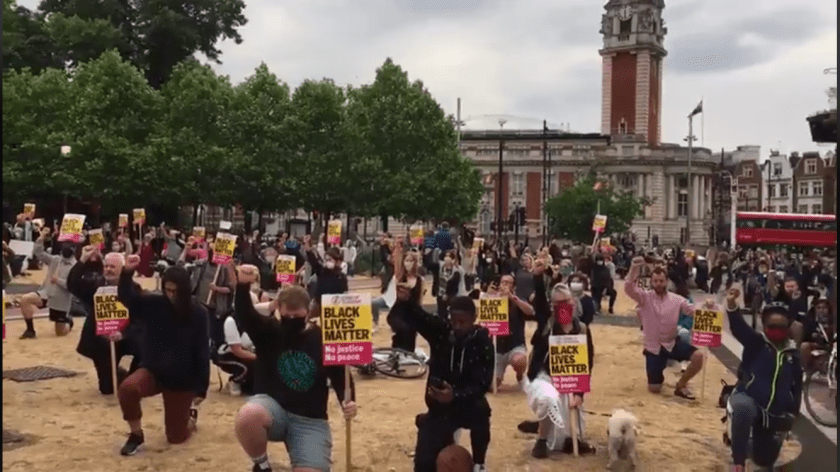
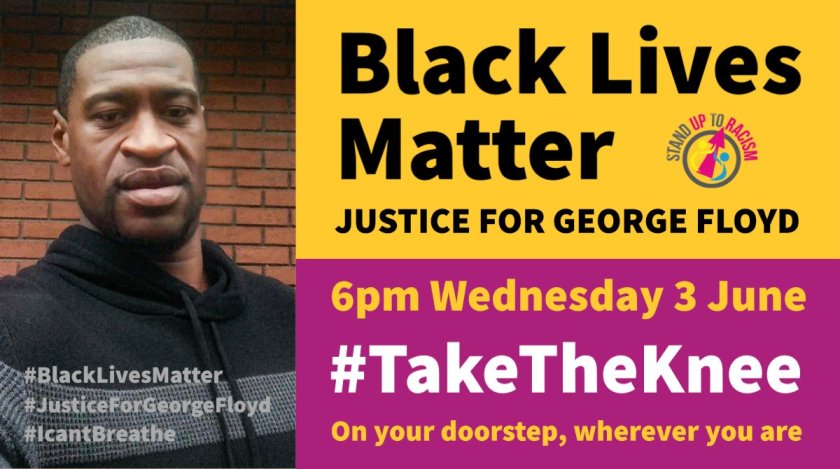
Today marks two years since the shockingly appalling killing of an unarmed black man named George Floyd by white police officer, Derek Chauvin on 25th May 2020. George Floyd. A name, we all now know well. His unlawful murder sent shockwaves across the world. In the days, weeks and even months that followed, protests took place in the name of anti-racism, people took to the streets and demanded change with their feet. Some of us marched. Some of us rallied. Some of us bent a knee. Our media coverage was awash with hand-written banners stating epithets such as “Black Lives Matter” and “silence = violence”. From Minnesota to Myanmar, the death of George Floyd in the summer of 2020 created a ripple effect of one international rally against racist police brutality after another. The killing of George Floyd forced everyone to talk about race.

“Black Lives Matter – Justice for George Floyd” – An e-flyer from June 2020 – Stand Up To Racism

On this second anniversary, I would like to share my account of what went on at my workplace (which will be referred to as “my Workplace” from here on) in the days following the killing of George Floyd and how, I, as the then co-chair of the internal Black affinity network (which will be referred to as “the Network” from here on) contributed to the various initiatives that arose in the aftermath.

Listening Sessions

Within a few days of George Floyd’s killing, the Network quickly sprang into action. We organised a listening session to provide support to fellow Black colleagues as we all processed the situation unfolding in America. The session, attended by over 100 colleagues, became the first of many moving listening sessions held throughout the summer of 2020 at my Workplace.

In the weeks that followed, I was invited to open several listening sessions. I supported the Head of a department with an entity-wide employee listening session, which saw Black colleagues as well as allies use the space to reflect, share and listen. I was also invited by several business area heads to share my experiences with their teams.
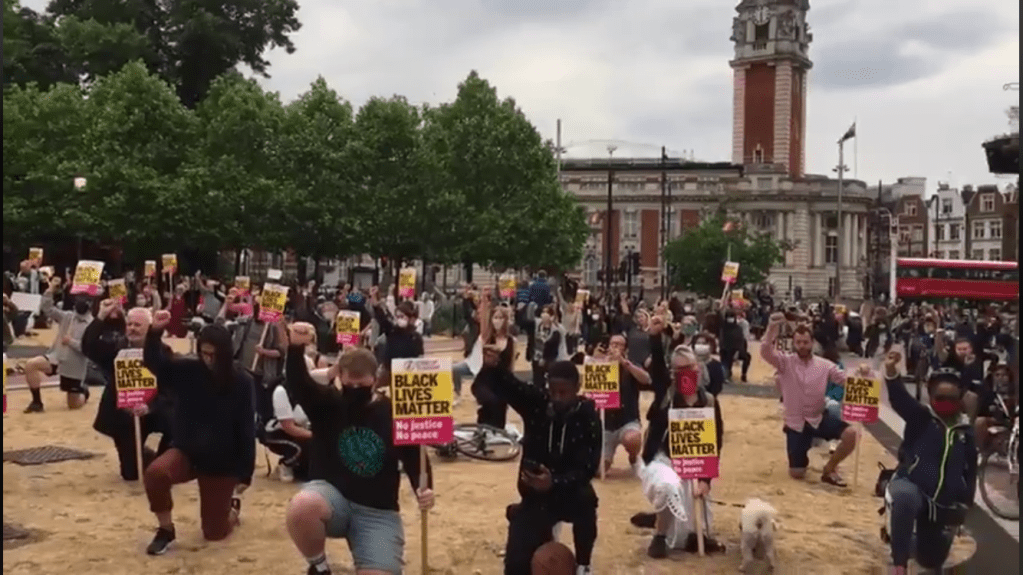
Brixton Black Lives Matter Rally 2020 – photo credit: unknown

Throughout the course of these listening sessions, the pandemic was raging on and I was in the early stages of a pregnancy. Now, as anyone who works in midwifery knows, high emotion is the last thing a pregnant woman needs. Nonetheless, like many black people who work in predominantly white spaces, I became hyper-visible at this time and on several occasions, as a network lead, I was thrust into the spotlight to deliver incredibly emotional accounts of my experiences as a black person and black professional. Could I have declined? Yes, absolutely but I said yes to these invitations because deep down I felt that the summer of 2020 was a one time only event – in that, in terms of the workplace, there would probably never again be a chance to talk about race in the same open and honest way. Two years on, the appetite for talking about race has dwindled, so I think I was right to say yes. I am glad I overcame the nervousness of facing predominantly white colleagues and divulging to them my inner most thoughts on and experiences of racism. As much as I agree with Reni Eddo-Lodge’s book, in the aftermath of George Floyd’s murder, it was indeed time to talk to white people about race.

The most visible of these listening sessions was when I was asked to address the global HR team about my experiences of race and racism in the workplace. I have included the transcript of this speech at the end of this post.

Influencing the Race Action Plan

Going back to the week after George Floyd was murdered, the office of my Workplace’s CEO contacted me and my then fellow Network co-chair inviting us to meet with him. The aim was to discuss what Black colleagues needed at that time and when we met on June 8th, 2020, we used the opportunity to stress the importance of not only issuing a statement acknowledging the killing and the impact it may have had on Black colleagues, but also the importance of seriously tackling race at work.

On June 10th, 2020, taking on board many of the points we raised, the CEO published a powerful statement including a 6-point action plan for tackling racial inequality in the workplace. This meeting became the first of several open, honest, and frank discussions between the Network leadership team and my Workplace’s most senior leadership about race and race equality.

On this second anniversary of George Floyd’s murder, I’d like to direct my focus on key decision makers, senior leaders, and middle management at my Workplace and indeed at all other organisations who pledged to do more and to do better back in 2020.

I hope we will all renew our efforts in acting against racism and bias in our workplaces and will once again, place a serious focus on action. To conclude my reflection on the monumental summer of 2020, please see below the transcript of my speech to my Workplace’s global HR team.


Listening Session, Thursday 2 July 2020

Transcript of Jacqueline Courtenay’s address to the global HR team via Zoom

Hello, so I have just a few minutes to share my experience as a black person. Please note what I share might feel shocking or come across quite strong, but it is only meant to provoke thought and stimulate discussions as we all try navigating and working through things at this time.

So, telling you what it’s like, for me, that means:

 – Telling you that whilst I wear a smile professionally, I live in fear even though to many people, the black experience isn’t that bad, it’s not like we’re slaves anymore is it? And whilst I’d love to agree wholeheartedly, the true things are still quite terrible for people like me. 

 – It means sharing another fear of mine. How I worry endlessly about my younger brother who at 19 and with about 10 years between us, he towers over me and due to his tallness to some with prejudices he may seem imposing as a young black man. How I fear for him whenever he goes out simply because there is a high chance, he might run into a prejudiced person who sees a threat in his colour before seeing the humanity or worse still a police officer who assumes he looks like every other IC3 male. I fear this because there’s a massive chance that the quiet, caring, non-swearing, non-alcohol drinking, comic-book loving, skilled artist and prospective architectural student, who spoke at my wedding and brought tears to everyone’s eyes with his moving wise words won’t be seen as anything but black and male and therefore a threat.

– It means telling you about my mum who routinely faced what we now call microaggressions in the early 90s, when she worked in healthcare and the specific time, she was ushered into a backroom along with all the other black members of staff and kept in there whilst a news team came to their ward and spoke with the white members of staff.

 – It means telling you the white colleague who was pleased I had changed my surname after getting married because my Ghanaian maiden name was too long for her to keep typing out in emails. 

 – It means telling you about the time when how not one but two, smiling white women after observing my daughter for a while, approached me and stressed how lucky I am for having a mixed race daughter with loose curly hair, resembling the European hair of her father more of mine African – then I could share how my stomach tightened as they pointed to their own – half white, half black, mixed race kids with a look of disappointment, indicating they hadn’t been as fortune. Did they realise how offensive that was to me, given the connection I shared with their kids?

 – It means delving into my early childhood, a time in primary school, during lunchtime when a 6-year-old me was told by my white classmate [name redacted], why I don’t go back to where I came from. Realising that early on that I couldn’t make off-the cuff remarks about the cold weather, because I was different. She told me that I should be happy to be here or leave if I was going to complain. Sounds like a prequel to Brexit if you ask me.

 – It means I could tell you about a speech I wrote in year 9, entitled ‘what is in a word’ detailing how I felt about the word ‘black’ a word which as an adjective it represents tragedy, disaster, calamity, ruin, darkness, and dirtiness, I could tell you how gutting it felt to me at 14 to realise that in comparison, whiteness signifies, purity, lightness, and innocence. I could tell you how to this day I grimace, knowing how Africans came to be called Black, how Europeans who coined the term, used it as a tool for division and rule. 

I’ve shared all these things, to appeal to you as human beings, to help you understand how it feels to be black. I’d like you to ask yourselves; in light, of all that has happened since the killing of George Floyd, what have you learned about the experience of blackness and the negative treatment of black people in our world? Considering our CEOs fantastic statement, do you personally intend to do differently to change things in our workplace?

I ask this because we’ve all been watching as the Black Lives Matter movement has moved into the mainstream, which as a result we’ve seen some symbolic changes. Whilst symbols matter, people aren’t marching streets to change the cover of Uncle Ben’s rice packaging, what we’re really asking for is deep institutional change and letting go of the biases we inherit. And so, another question for you is, considering the statement from our CEO, do you think we will see change in this institution?

We are all privileged to work under the leadership of our CEO, a financial markets heavyweight, who isn’t afraid to tackle racism and I’m proud he even calls it that than using some other convoluted term. He’s bold. But not just that, as an organisation we’ve done great work. We have established a Black Employee Network. We’ve got policies to tackle discrimination. We’ve got a whistleblowing policy to make it easier for people to come forward. We’ve reviewed hiring practices to reduce bias. We’ve got unconscious bias training, there’s still something else. There’s still something missing. In some places, anonymous CVs are used to curb name-based racism. Perhaps we should do that. But what we also haven’t done is have sticky, uncomfortable conversations about how the external environment impacts what goes on here and pushes against our internal efforts to bring about change. Hopefully conversations like this, which I commend (name redacted) for initiating, will help move the conversation forward.

Perhaps we need to openly discuss how it is that the city got its wealth. Perhaps we still need to understand why racism still lives in the hearts and minds of so many. Perhaps we still need to talk openly about the fact that the British taxpayer only finished paying government debt in 2015, that was established over 200 years ago to compensate British slave owners who had lost earnings after slavery was abolished. Perhaps we need to speak openly about the private-school-to-private sector pipeline that distorts the true reflection of London in City firms. Perhaps we need to investigate why it is that across the City firms HR teams’ band the words “diversity”, “inclusion” and “unconscious bias” around but all too often these same teams do not embody or represent the diversity in their own teams. Perhaps we should talk about how deeply ingrained all of this is when we see how the Home Office treats black people, that the Windrush scandal wouldn’t have happened to the French-British community but happened very easily, very quietly and very routinely to British-Caribbean’s and British-Africans. Until we’ve confronted these truths and renounced the reprehensible actions of the past and present, ask yourself, will anything change?

Not to seem pessimistic but my hopes aren’t that high in truth, and why is that? Well because, race is configured very strategically in the UK. British racial affairs until recently, all took place abroad. Instead of going to watch the latest lynching’s as people did in early 20th century America, comparatively British people were oblivious to the screams of slaves being lashed or dipped into boiling liquor until their skin peeled off or had boiling water poured down their throats by British slave owners, like Arthur William Hodge, because none of this happened on British soil. It happened in the West Indies. And instead of hearing about this violence in the British Caribbean or the brutal colonialism that rampaged through Ghana where my family come from, British people of the early 20th century instead heard about the salvation British missionaries brought through God’s word, to the ‘savage’ West coast of Africa. Our civil rights movements even happened abroad, run by men like Kwame Nkrumah in Ghana fighting for independence from the British. It makes sense then why to many people, the matter of race has nothing to do with Britain. But Afua Hirsch told us when she spoke in our theatre last year (i.e., 2019) about the mills, still standing in picturesque English towns and their direct links to British slavery. We haven’t spoken about any of this not as a society and not as an organisation, it is still the elephant in the room. But it matters, race has everything to do with the UK and as British brand with a rich history, race needs to matter to our Workplace.

We don’t all come to this with the same knowledge or understanding, but at a very foundational level, when it comes to the diversity we have in the city of London: we are here, because you were there. Black people in the UK are descendants of colonialism. But if you didn’t know that you were there, you will find what I’m saying confusing. I mean I was born here, went to school here, went through the same curriculum which failed to teach any of us the details of how Britain became Great. But being black means that because racism and hostility greet you in day-to-day life, you find yourself pouring into the historical texts, exploring the histories to centre you, to bring some meaning to all the injustices you face. If you aren’t black, I get why doing that may not seem so pressing to you. It’s just like having an injury, unless you’ve experienced that same injury, you may never understand the depths of that pain though you may sympathise.

The failure to educate us about race at school, has done us all a huge disservice. But learning isn’t just for the young, life is a teacher as my mum says, and learning is lifelong. So, it is vital that you join the conversation. It is vital that we learn the true stories of British empire and imperial rule, it is vital that we come to terms with it, that we aren’t too quick to defend the 500-year system by jumping to say, “but we abolished slavery!”

Whilst I am happy about the statement from our CEO recently and hopeful, on a societal level I am mostly weary and sceptical about how genuine this moment of change is, because none of what I’ve said is new, none of what we’ve seen in the George Floyd case is new, the history is not new, it’s there. What is new is, to quote the writer Gary Younge, “this time it’s multiracial, it’s young, and it’s global”. It’s playing out in different places and so it feels like change is in motion. It’s just up to individuals in positions of power, like yourselves in HR, to choose to pick up the baton because this is a marathon. But if you think we have done enough, if you think all this chat about race is redundant, tired and unnecessary, if you think the work is done, if you think there are no wrongs to right, then in the words of white American educator, Jane Elliot, my last question for you is: please raise your hand or unmute yourself and say ‘yes’ if you think things are in such good a position that you would like Black people in our workplace, in our industry and in our world are treated?

End

Thanks for reading.
Leave a comment

Righting wrongs and saving a failed generation: A debate on London’s knife crime

Hey, so it’s been a while, hasn’t it?

Bit late but Happy new year! I’ve been busy with mothering, managing a home, writing and just…life. By writing, I mean:

I should take this opportunity to say how grateful I am for Left Foot Forward (aimed at political progressives) and Black Ballad (features and champions inspiring content from Black British women) for giving me the chance to add my voice to their great platforms and excellent platforms they are. Please check them out.

In this my first post of the year, I’d like to touch on the topic of Knife Crime that is happening in many pockets of London – a city I call my home. With 40 knife related crimes occurring everyday in the city, it is safe to say we have a problem. It’s not a new problem and that is what is most frustrating. Because it’s not new, I believe the government know exactly how to tackle the problem but simply don’t want to invest enough money in the right areas. If the government could see to the end of the reign of the notorious East End gangs such as The Krays, then it is ridiculous that there is a sense that the Met and other government agencies are at their wits end.

The “problem” as a matter of fact, is largely one concerning African and Caribbean people, namely young African and Caribbean Black British children, particularly boys. I’m not alone in believing that if it concerned White British children (of any socio-economic group) and if it were this group of children engaged in vicious gang life, the matter would be dealt with swiftly without the need for a well-meaning BBC programme such as London’s Knife Wars. If there was such a programme about an issue prevalent in the White community, I’d also hedge my bets that it wouldn’t be referred to as “wars” either. Whilst important, the programme failed to give members of the audience enough time to articulate and provide robust solutions towards tackling the problem and was ultimately a series of frustrated voices each using 20 seconds or less to share their insights.


A few weeks ago I got to see firsthand how MPs debate on matters as pressing as this. Just after Christmas, I got fed up, came up with some ideas on eradicating part of the problem via reducing school exclusion rates and I got in touch with the office of my local MP, relayed my ideas and have since started an important dialogue about the various disadvantages faced by some young people which makes them susceptible to exploitation by organised crime.

As a result, I was asked to come along to the Westminster Hall debate on Knife Crime on Thursday 24th January 2019 – the following outlines the most salient points raised in the chamber during the three-hour debate chaired by Karen Buck MP:

  • John Cryer, MP for Leyton and Wanstead:
    o His constituency has the sixth highest prevalence of schoolchildren involved in gang violence
    o The Waltham Forest borough has lost £100m in much-needed funding
    o Social workers are now afraid to work because their roles are so dangerous and don’t seem worth doing due to pay freezes
    o Cuts in mental health services is also a factor and Cryer stressed the need for more preventive causes
    o He urged for: a joined up approach, a select committee inquiry as per the Tribunals Act and even a public inquiry to hear from young people touched by gang violence and knife crime, and called for it to be led by someone who “really understands the situation”.


  • Julia Lopez, MP for Upminster:
    o Called for an increased budget in the Met for a more visible approach
    o Need for Youth Rehabilitation interventions
    o A crackdown on international drug operations in London


  • Iain Duncan Smith, MP for Chingford and Woodford Green:
    o He called for joint-activity policing and implementation of a public health model – an approach which “cannot be patchy”


  • Stella Creasy, MP for Walthamstow:
    o Discussed the lost contribution of the young people we have lost
    o In her constituency alone, approximately 230 people were involved in gang life and 12 serious gangs were in operation which only seems to be increasing as the GLA (Greater London Assembly) predict a 15% rise in young people joining gangs
    o The borough of Waltham Forest has lost around 200 police officers
    o She discussed the business ethos of drug dealing as well as middle-class drug users fuelling the problem
    o Touched on the need for more funding in schools with 41 pupils a day being excluded permanently and pupil numbers at Pupil Referral Units (PRUs) steadily increasing
    o Urged for a preventable health approach where different departments could join up and work together


  • David Lammy, MP for Tottenham:
    o Gave a rousing speech where he spoke candidly about the disproportionate exclusion rates of Black and minority ethnic children and so much more. It’s best if watched in full (see here, starts at 1:50:32)


  • Sarah Jones, MP for Croydon Central:
    o said that in the face of significant cuts, the Violence Reduction Unit (VRU) had reduced the prevalence of knife crime
    o children in PRUs are most at-risk because they finish school much earlier than mainstream educated children and walk right into the hands of gang operatives
    o told the chamber the upsetting story of a five year old Black boy in Croydon, who’s school were aware he had a high chance of being Autistic, but excluded him anyway for being upset in class

This being my first time at a parliamentary debate I’d not chosen an easy one to witness as I was seated closely by the family of a young bright and talented East London teenager, Jayden Moodie, who was viciously killed on 8th January 2019.

I had to hold back my own tears, as a mother, as Stella Creasy MP spoke movingly about the loss of such a young member of the community in such tragic circumstances. With his mother stoically seated just three chairs on from me, I couldn’t help but admire her as she listened to politicians practically begging the government to get it together on an issue that, I’m certain, has irrevocably changed her life.

Ultimately, there was a lot of agreement in the Chamber about what should be done and the issues being faced. I hope these weren’t empty words. The young, young lives lost deserve so much more than that. I look forward to seeing how the government deal with the comments shared at this debate.
The main takeaways for me were the need to:
– explore alternatives to school exclusion practices
– have a greater understanding of adverse childhood experiences and how such experiences dramatically increase chances of a life of crime
– support calls for a full inquiry
– advocate for a bespoke public health model to be implemented across London, similar to the Glasgow model, but one that focuses on the role race plays in the capitals knife crime epidemic

And that is all from me, for now.

Peace,

Jacqui

Dear Warren and those tired of hearing about privilege…

“Don’t you ever give it a rest” asked Warren.

Your fellow white citizens are fed up to the back teeth of being told by this particular privately educated, Oxbridge graduate how privileged they are. F*** you”, he continued.

And so it goes. The virtual vitriol directed at people like Afua Hirsch and anyone like her who dares stand in the face of racism and demand its ejection from our society.

If you’ve not heard of Afua Hirsch, I suggest you get your Google on, ASAP. She’s the author of best-selling book, Brit(ish). A book I’ve just embarked on and have already fallen in love with. I’ve been following Afua’s career for years now and am so pleased she’s produced a piece of work as apt, on the mark and gripping as Brit(ish). It’s not really a surprise though, she’s been consistently amazing. From holding her own up against somewhat unsavoury characters, on Sky’s The Pledge and her campaign to raise reassess the statues of figures from Britain’s imperial past was an important cause. Essentially she’s full of knowledge about all things race in the U.K., she is passionate about keeping things in check and for that I’m a fan – if you hadn’t noticed already. It helps that I’ve got things in common with Afua. Both British born and of Ghanaian-origin (she through her mother and I through both parents) and both feeling very much Brit-ish. But, even if we didn’t have any similarities, I’d still be interested in hearing what she’s got to say. The same cannot be said for our dear bud and Twitter-comrade, Warren.

For Warren, it’s all a little too much. You see, Warren would like nothing more than for Afua to just shut up. With all the inequality Afua likes to point out and topic of white privilege she brings up from time to time, it’s all just a massive inconvenience for Warren. Not the racial inequality itself though, no.

So to you, the condescendingly arrogant keyboard-warrior who told Afua Hirsch to do one and then demanded I explain why Afua Hirsch is less privileged than you are. This one’s for you.

“Don’t you ever give it a rest” was the first thing I saw from you. This was the first flag of your flagrant racism. You gave yourself away with that question and so I had you sussed well before your fourth tweet, where you tried to politely persuade me to engage in a debate with you. And rightly so. People looking to correct the balance of privilege should have no time for those who insist there isn’t an imbalance to begin with. People who try to berate those fighting for justice. People who are more offended by those discussing the cancer of racism in our society than treating the actual cancer itself. People who abuse the abused.

People like you, Warren.

According to you, your life and that of your “fellow white citizens” would be made more bearable if Afua et al just ‘gave it a rest’ clearly haven’t heard that silence is complicity. To be silent where there is injustice, is to be complicit. So no, Afua should not give it a rest. I will not give it a rest. We will not be shut up because you and your mates are ‘tired to the back teeth’. Get ready for a dental appointment, because your teeth might find they’re more than just tired.

We are tired. We are tired of the everyday racism. We are tired of both the overt and covert racism that is woven in the fabric of our society. We are tired of the microaggressions. We are tired of being paid far less than our white counterparts. We are tired of tasers being used on us far more. We are tired of being jailed more for crimes, that we commit at lower rates. We are tired of the many miscarriages in bringing killers of Black, Brown and Mixed-Race people to justice. We are tired of being “under-policed as victims and over-policed as suspects”. We are tired of being unemployed at higher rates. We are tired of our young leaving school and being paid less than the youngest among you. We are tired of the institutions that harp on about diversity but still aren’t very diverse. We are tired of the higher than average “permanent exclusion rates for Black and Mixed-Race pupils”. We are tired of the media that still hound our black football players. We are generally tired of hateful media campaigns and we are tired right along with Prince Harry for the “wave of abuse and harassment” the media dishes out to anyone with a smidgen of blackness. We are tired of the excessive force used on us by police. We are tired of the higher rates of prosecution and sentencing for Black people. We are tired of being victims of race hate crimes on Britain’s railway networks. We are tired of feeling unsafe in our local areas almost twice as much as our fellow white citizens. We are tired of the squalor,  substandard, overcrowded and unsuitable accommodation our poorest are allowed to live in. We are very tired of being more likely to live in poverty. We are tired of our women having four times the mortality rate in healthcare despite making up a great number of NHS care staff. We are tired of being disproportionately held under mental health legislation.  We are tired of our young men being stopped and searched at an entirely too high a rate. We are tired of our young black students facing insidious racism from their young white counterparts. We are particularly tired of racist abuse by hordes of white students in student halls across the nation. We are tired of the many workplaces which fail to equally pay their non-white members of staff the same as their white employees. We are tired of being stopped at customs by airport security far more than necessary and far more aggressively. We are tired to the back teeth of the unconscious and sometimes, very conscious bias of our fellow white citizens towards us. We are the ones who are tired.

All this, even when backed up with data, means nothing to Warren and the multitudes like him, who insist that white privilege doesn’t exist. It exists. White privilege is being arrested three or four times less than your black counterparts. White privilege is being more likely to be in full time employment. White privilege is being more likely to own your own home than other ethnic groups. White privilege is having higher attainment levels for reading, writing and maths than pupils other ethnic groups, despite being just as poor. White privilege is having Canary Wharf far less policed than Tottenham, despite more substance abuse taking place there. White privilege is having your drug-taking referred to as recreational drug use rather than being linked to gang activity. White privilege is to walk around without fearing for your life. I could go on…

But apparently, Afua has “had at least as good life chances as” yourself, you say? In fact, you feel she has “had far greater life chances than the vast majority of Working Class white people”. Warren asks, “is Ms Hirsch more or less privileged than the average white citizen of the UK?” This is the point where I injected myself into the conversation, with a meme of an exasperated Raven Symone (because, like I said, we are tired). That was my first mistake, because Warren then insisted that I explain “how a privately educated, Oxbridge graduate, who has media jobs others would give their right arms for (Afua Hirsch) is less privileged” than he is. He lets me know that he is “really willing to listen if” and only if, I “can provide a coherent answer” and God forbid I respond with a meme. No, no, no. No memes because this isn’t Twitter or anything.

The entitlement. The sheer entitlement of it all. So I commit my next sin by letting Warren know that when Afua was a teen she was kicked out of a shop in her local area for not being the “type” of person” they served. Against my better judgement, I asked if he’d ever be on the receiving end of such treatment. Obviously he hadn’t, because the very reason this happened to Afua was because of her perceived blackness. Bad idea.

“I was going to write, “no, of course not.” Then I remembered I sometimes got refused service in restaurants when I was younger. Presumably, to do with the way I spoke, dressed, acted … It happened more than a few times” responded Warren.

I could sense that Warren had felt he’d triumphed in what I realised this debate now was: Oppression Olympics. My third and final mistake was this: “occurrences like that happen more than a few times when you’re of a darker hue. Believe me. As you’ve pointed out, it could’ve been your way of speaking among other things. All things you can change to reduce racial bias against you. Can you change your race,” I asked.

Still the point was lost on my Twitter comrade. He quipped back that I and another Twitter were ‘obtuse’ (love that word) “to not know that a privately educated Oxbridge graduate has far greater chances than the rest of the population, irrespective of their skin colour”. To that, I say, class differences can transcend racial barriers. That is why most Black parents raise their children to work twice as hard so that despite your blackness or mixed-raceness, you can still have a decent place in society. That’s only the theory though. In practice, the success stories are still few and far between. So yes, your question was offensive. Particularly for it’s ignorance. Did you forget that the odds are heavily stacked against Black, Brown and even Mixed-race people and are mostly in the favour of White, often irrespective of which class they fall into? Despite Afua’s pedigree, pick any FTSE 100 company boardroom, fill them with clients, and I guarantee that if you and Afua walked in together, you would be perceived completely differently thanks to skin colour alone. Why? Because you are white and male. Need I say more???

Your offensive assumptions that Afua’s “white side” got her the “best education money could buy, the right contacts and accent” and her “black side” doing nothing more for her than allowing her to “fill token minority positions” shows that you understand White privilege very well. About Afua’s place in society, I implore you to understand one thing: it was achieved through the hard-work, determination and grit of both of her immigrant parents, not her white side or black side, as you so callously put it as if we were talking about a coin rather than a human being.

Being Black or mixed race, isn’t a gravy train for filling up minority positions, the institutionalised racial discrimination and systemic racism across the board in the UK, is not a perception, paranoia or simple politics of black and brown people who detail their experiences of it. For us, it’s not an assumption and it is definitely not a figment of our imagination. It is real and it really doesn’t matter if you’re fully black and brown or mixed-race, because the one-drop rule isn’t just an American thing.

As I close this letter, I hope it has answered your burning questions about privilege. If it hasn’t, you would do well to buy Afua’s book, Brit-ish as this will inevitably answer some, if not all, your questions around privilege. I stress the point once more: if you are discerning enough you’ll notice very quickly that Afua’s privilege wasn’t down to the miracle of being half white, it was down to both of her hardworking parents. So instead of assuming, buy the book. Once you’ve read the book, I hope you’ll stop being obtuse and really get it together. With life being as short enough as it already is, do you seriously think a privately educated individual would bother wasting time talking about racial issues, with the tenacity and conviction that Afua does, if we had racial equilibrium? The answer is a resounding, no – she wouldn’t.

So ask yourself, if Afua and those like her aren’t wrong or lying about the struggles they face due to their race, then why do I have such a problem with them trying to get rid of it? Really ask yourself why people like you are more offended by those calling out racism, such as Ms Hirsch, than the actual racism itself. Why are you more offended by the mention of your privilege than the very obvious privilege that plagues our society?

Sincerely,

Jacqui


Sources:

https://www.equalityhumanrights.com/en/latest-projects/race-report-statistics

https://www.bbc.co.uk/news/uk-england-london-44376688

https://www.theguardian.com/uk-news/2018/dec/05/met-police-use-tasers-and-restraints-more-often-against-black-people

There’s a first for everything…

Hi, I’m Jacqui and thanks for joining me!

Good company in a journey makes the way seem shorter. — Izaak Walton

post

Quite right, Izaak Walton. I’ve never heard of you but those are very wise words. Good company, is what I hope this will be. We shall see…

Thanks to WordPress’ automated theme template, I’ve got a snazzy quote at the beginning of my very first ever blog post accompanied by a snazzy shot of the sea and a beautiful sunset (or rise, depending on your perspective). The quote is not too bad at all and neither is the stock image above, so I’ve decided I’m keeping them.

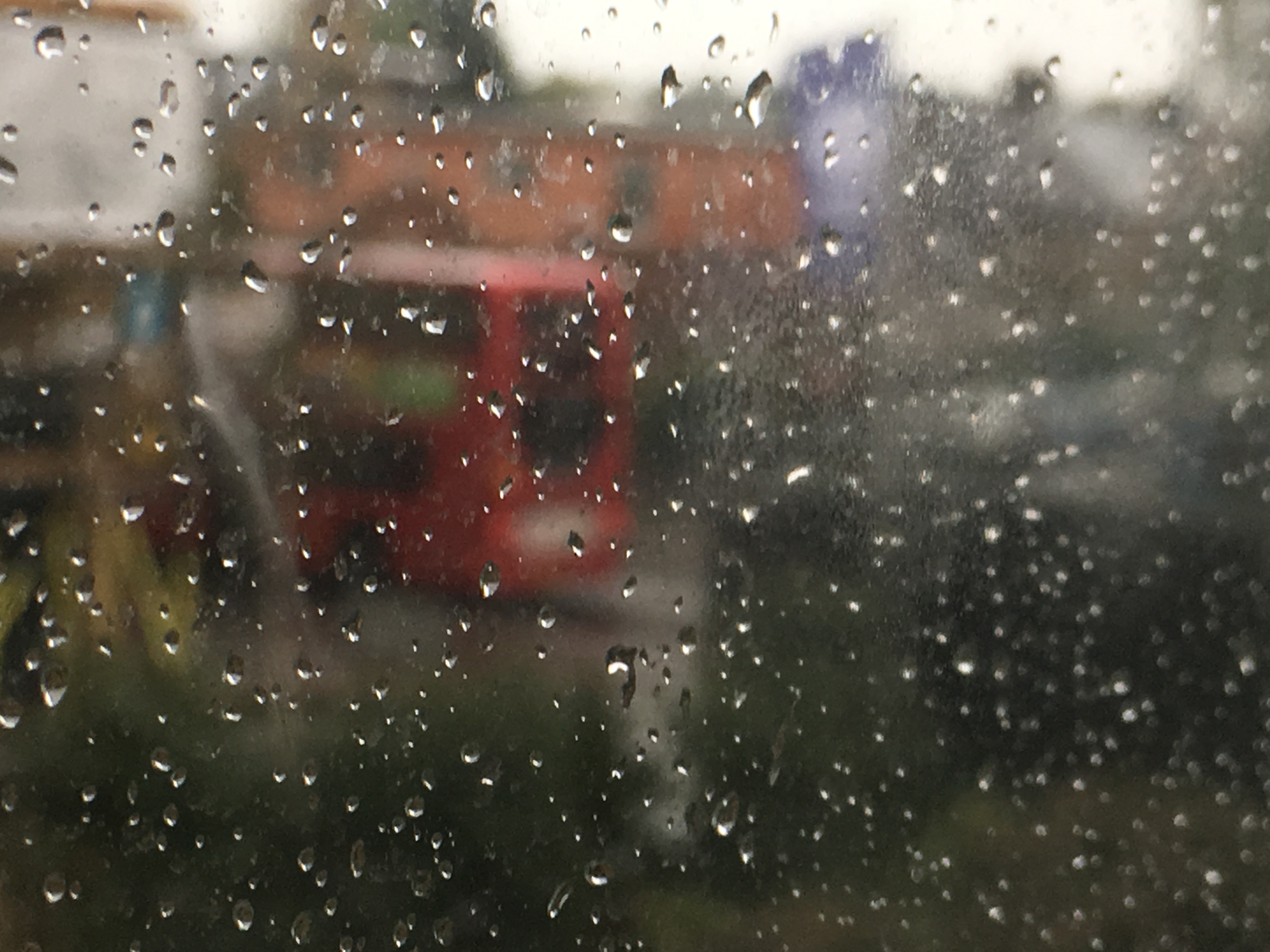
Anyway, anyway, anyway, it’s the first of November 2018, this is my first blog post and the view out my window is nowhere near as pretty as that sun-set-rise above. In fact, it’s a very rainy day in east London where I live. Actually, if I was trying to be all artsy, I probably should’ve started the post with the following image…

blog1-image2
01/11/2018. View, not from a bridge, but from my window. Rain and a red bus. Oh so very London.

But whilst art is one of my passions, art this blog is not.

So if this isn’t about art or my general interests then what is it about? In other words, why have I set up a blog? In short, I’ve set up a blog because I have something to say about society. How broad, ambiguous and inconspicuous is that, ay? Very. So to be specific, my answer is…I’ve got something to say about the state of our society. Still too broad? Right, well to be extra clear –

I’ve created this blog to house my thoughts on the state of our society as it relates to an invisible concept that we all live by: The Social Contract

Something tells me that I've gone back to being all broad and ambiguous again. Hopefully I've not lost you. Sorry if I have...

The Social Contract is something, well actually it’s a school of thought and a theory, that I’m quite vested in. I’m not entirely sure why but I’m just very interested in the idea that our society is founded upon the belief that we (i.e., members of society) have given up our natural rights to be part of something bigger, better and safer (i.e., society). The odd thing is, we’ve given up our society to the control of democratically elected bodies (i.e., government) to rule over and protect us from harm. Sounds pretty straightforward but for some reason, within that definition of society or the contract that allows us to live in it, I’ve got so many questions. Not just questions, but thoughts too. Such as: does our government hold up it’s end of the bargain? OR, does the social contract need to be rewritten? etc…

This blog is just my little part of the internet from which I’ll ask my questions and leave my thoughts.

This blog is where I’ll talk about the state of our social contract, the state of our society and the state of our consciousness about our society.

This blog is where you can disagree, agree, argue, criticise or just observe my thoughts and questions about all things: ethics, liberty, power, class, race, greed, hubris, equality and the current affairs of society. So vague! But whatever, I’m not deleting that line because I like it.  It tells you about the things I like to talk and think about, so it’s staying put :).

I hope you’re staying too. See you in the next post, if you are.

Cheers,

Jacqui

P.S., I’ve got a degree in Business Management and Accounting. In my third year, one of my modules involved the study of Corporate Collapse, within which we looked at ethics and the causes of business failure. In one of the more memorable lectures, we were introduced to this concept of the Social Contract from the perspective of 17th century philsopher, Jean Jacques Rousseau. So yeah, that’s where this 20-something year old, London mum who works in the City got all this society and social contract spiel from.