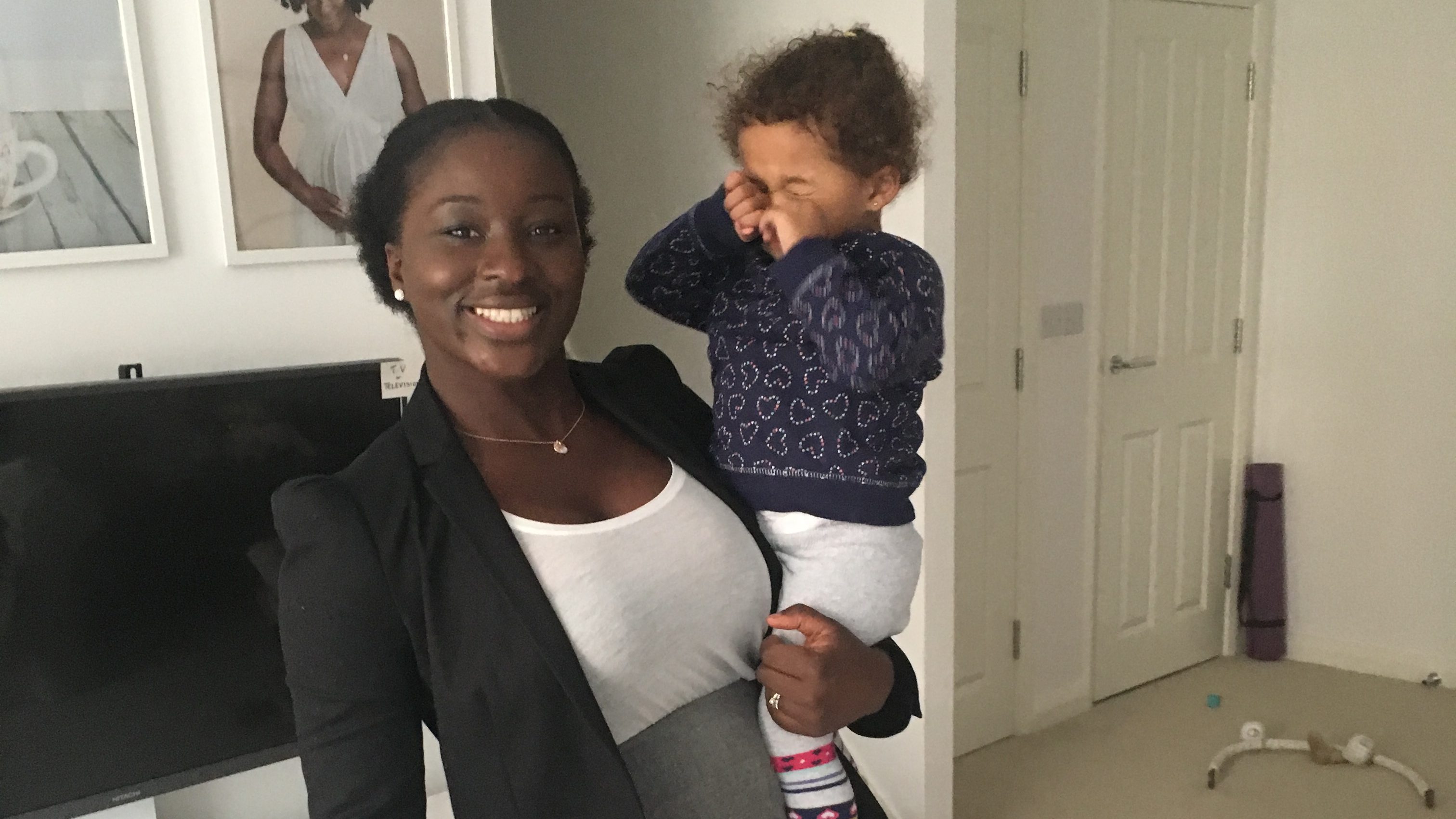
Why I am a working mum & the women who told me doing both was possible

Written by Jacqueline Courtenay, 22 May 2022


So many people help us along the way, however because so much happens in life, oftentimes it is easy to forget or even misremember exactly how we come to make the decisions we make. We forget the small drops and pearls of wisdom that cause ripple effects in our lives. We all too often fail to recall how something triggered another thing which in turn led to whatever it was that eventually got us to where we are stood today. Not all of it may seem significant but in actual fact, even the seemingly little, brief and fleeting influences are all important aspects of our journey towards achieving our goals. In this blog post, it is in this vein that I would like to share a little story from almost a decade ago. As now a fully-fledged, full-time working mother of three, I reflect on one of the moments which helped cement this decision, reinforce this call and underpin this vocation of unapologetically doing both. I am looking back to one particular day almost ten years ago to share a brief story about how attending a seemingly immaterial event assisted in cultivating my entire approach to working motherhood.


I am 21 years old, the year is 2013 and it is an overcast Saturday afternoon one day late in March. At that time, I live in my hometown Islington with my mum and my younger sibling. I am also a few months shy off graduating from university, after which point I have set my sights on studying law. I have an offer to study at City Law School later in the year, and I am determined to soak up as much information about entering, working and thriving in the Law as possible. As 1pm approaches, I am hurriedly getting ready to head out to a workshop entitled ‘Get YOU ahead in Law’[i] which is being held at Birkbeck university, and is organised by Sonia Meggie through her incredible organisation, Inspirational YOU. I am running late for the talk which starts at 2pm and as a then budding law student, I am desperate not to miss out on hearing from the four successful lawyers as billed on the Eventbrite page. Back then, I made a point to attend as many such masterclasses and networking events as possible to hear from industry trendsetters, pioneers and trailblazers. And as a student who undertook ten internships, work placements and volunteering roles, collecting business cards was a treasured hobby.

At around 1:30pm, I jump on the 91 bus from Caledonian Road, to Kings Cross, then up Euston Road before it sedately arrives at Russell Square just minutes before 2pm, where I alight. I walk through the heart of the University of London Bloomsbury Campus Area before entering Birkbeck University’s Torrington Square building, making it just in time. Upon entering the lecture room, I present my ticket to the Inspirational YOU staff and then take my seat. I also take in the breath-taking view of the four panellists on stage – all women and all leading lawyers.

For context, the panellists (and the positions they held at the time) were: Laurie-Anne Power, Barrister; Miranda Brawn Legal Counsel at Citi Bank & former banker; Julia Furley, Barrister & Partner; and Elizabeth Nolan Solicitor & Head of Employment Law

Be Inspired 2 Empowering workshops and inspirational talks for all14:00pm: How to get into law and succeed  Inspirational YOU – Be Inspired – Series 2Birkbeck, Torrington Square, London, WC1 7HX Saturday 23rd March 2013 From 12:00pm – 7.00pm
IY Be Inspired 2 – Saturday 23rd March 2013 – Birkbeck, University of London

The host Garry Green, Barrister at Tooks Chambers, kicks things off and from there the we hear from each panellist. With the topic of the talk being getting ahead in law, I was expecting to hear about the intricacies of getting into the profession, and was hoping to pick up some gems about routes into law and how to make a great first impression in interviews. As the talk went on I realised it was about having a far more in-depth conversation. I listened intently as the panellists shared not only their insights into law and their journeys into the profession, but also the obstacles they faced within it. Throughout the talk there was an air of “you can make it”, regardless of the status quo or the conventional way. Each panellist shared their career highlights, their lows and what had been required of them to succeed in a still male-dominated career. It was inspiring to hear successful women of differing cultural and demographic backgrounds share their commonality in coming from humble beginnings and moving into a profession widely known for its high barriers to entry, its reluctance to include minorities and women and its preference to permit access to the elite.


I pause here to say that, it has been almost a decade since this talk took place and fortunately in that time, many efforts have been made to diversify the make-up of legal professionals. Things are slowly improving. A welcomed transformation.


It was altogether an incredibly heartening talk to take in but why it has elevated into a standout moment of my coming age story and a moment that has been seared into my memory is because the conversation unexpectedly moved into how motherhood and relationships intersects with work. Until then, most of the masterclasses I had been attending throughout my time as a student were formulaic in their approach discussing matters of work as if there were little to no connection between work and social life. However, in this talk the panellists generously shared candidly advice about how their romantic relationships and decisions had impacted their careers, and this was incredibly refreshing to hear.

Some shared their regrets about pursuing careers and abandoning their love lives, because of the fear of needing to commit to their work. This is a well-known experience and is a theme that has blighted the careers of working women for years and continues to hinder our ability to not only break the glass ceiling but to remove it altogether. Others inspiringly shared how becoming mothers at a young age, before university, had not deterred them from starting a career in law nor had having more children since.

By the end of the talk, the host opened up the floor to questions. Now, anyone who knows me (and knows me well) will tell you that I love asking questions: good, solid, thought-provoking questions. If you were to ask me what my personal values are, asking questions would easily make it into the top three! I ask questions for four main reasons: it is in my nature to do so, it helps build emotional intelligence, it is an effective way to communicate and connect with others, and finally because I am always seeking to learn and gain more information. There is also a fifth reason: I love to talk, and what better way to talk than through the art of asking good questions?

As soon as Garry Green turned to the audience for questions, I shot up my hand. I had a burning question and surprisingly to me, it wasn’t the sort of question I thought I would be asking when I was rushing my way to the talk earlier on that afternoon. As I made my way to the event, all that was on my mind was law, training contracts, pupillages, vacation schemes etc., nothing about relationships and their impact on work were on my mind. I believed that such a topic was reserved for the kitchen table. But by the time it was my turn to hold the mic, I stood up and found myself thanking the panellists for being so open and honest about their experiences and asking, with respect to relationships and work, what advice they would give to their 21 year old selves?

It is the responses to this question that have inspired me to look back on this small moment in such great detail and discuss how from the moment that “advice for your 21 year old self” question was answered, my approach to working life changed forever.

I received several responses, all of which were something to the effect of: “Avoid regrets by doing both. You can do both”. In fact, one response in particular, was almost exactly that!

Another said, “if you meet a nice young man don’t let him go because you want to focus on your career, you can have both!” The audience chuckled, as one panellist said something like if I met a young man who couldn’t handle that, then he wasn’t worth pursuing.

I remember going home, telling my mum all about it. To my surprise, she was in complete agreement. Of course she was, whilst not in the ways she planned, she has been a working mother herself. She has always been driven and strived to get things done and I have always been inspired by that example. Perhaps, because of this, I was always destined for working motherhood in the way I am doing it now anyway, but I believe that my upbringing coupled with this unique experience of having several thriving women in the Legal world imploring me to believe that both can co-exist, has played a key role in shaping the working mother I am. Ever since that talk I have been an advocate for doing both and as I practice it now, I believe that it is not a myth and one does not have to give for the other. I truly believe that we can have it all, but I can see also why, sometimes, some of us cannot and much more work must be done to ensure that all mothers can live in a way that their work and parental responsibilities co-exist harmoniously .

A year later when I met my now husband, I told him about how these women had inspired me to be a working mum one day. Early on in our relationship, I made a point of sharing this with him – I won’t say whether my aim was to see if it would scare him off or not but I will say this: it was a very nerve-wracking thing to do. When you’re dating it isn’t typically the “done thing” to lay your cards on the table and say this is who I am, this is what I want to do with my life and if you’re not on it, well then, bye-bye! I honestly thought he’d run a mile and I told myself that if my ambition of being a full-time working mother, who shares the load equally with her partner sent him flying, then I’d know whether he was the One for me, not that I am much of a believer in the One but I digress. Surprisingly, he was on the same page. Coming from a two-parent household where both his parents worked full-time for most of his childhood, he wasn’t some millennial cave man who expected his partner to stay home with the kids. Something about working parenthood resonated with him almost as much as it had resonated with me. In one of our earliest conversations, we talked about splitting the pick-ups and everything else. Nearly a decade together and three children later, supporting one another in parenthood and working lives, is something we practice each day.

I am so glad we talked about who would do what and just how working parenthood would work, early on in our relationship because whether I am supposed to say this or not: male partners play a crucial role in the success of their female partners. You know the saying, “behind every great man, there is an even greater woman”? Well, I’d go so far as to say, “behind every successful working mother, is a supportive working father who wills her to earn her own living”. I strongly believe that successful working mothers, specifically those like me in heterosexual unions are only as successful as their male partners support them to be. A male partner who is not fully in support of his female partner is not one who is going to help her dedicate herself as much to her career as to their home life, by taking an equal share in the duties of being an equally present parent and sharing in the running of the household.

And so, as we continue to demand equality in the workplace, I am hopeful that more and more women will continue to demand equality in their households, because the key to successful working motherhood is in having an equal balance in both our romantic and working lives without fear that doing so can hinder your career.

I thank the women who shared this piece of advice with me on that day in March 2013. Thanks for letting me know that when it comes to work and motherhood, that doing both is possible.

Sources:

[i] Get YOU Ahead in law, Inspirational YOU, 2013

[ii] Bloomsbury Campus Area Policy brief, Camden Council, 2020

Thank you for reading. Leave a comment below. LIKE. FOLLOW. SUBSCRIBE.

For expectant working mothers, here is the truth about maternity leave covers

Written by Jacqueline Courtenay, 20 January 2022


Perhaps you are about to go on maternity leave, your workplace is probably making plans to find someone to cover your role. What does this process invovle? What is required of you? How will you ensure continuity during your time off? Well, in this post I attempt to discuss the highs, the lows, the fears, the preparations, the gratitude and the frantic emotions that come with having someone cover your role (for up to a year) whilst you are on maternity leave undertaking a new job altogether.


Photo by Pixabay on Pexels.com

Introduction

Having worked in HR and Recruitment before, I know that finding maternity leave cover can be a time-consuming, time-pressured and challenging task. Seemingly, it is a task that rests squarely on the shoulders of an employer, more specifically the person in charge of the team. In my case(s), incredibly (perhaps slightly unfortunately too) it has been the sole responsibility of one person: the head of my team. He has been in the unique position of having to find multiple people to cover my role three times over in the past five years, as well as that of three other women in our team! I am very grateful to him for this, especially for never making me feel like a burden because of my family planning choices. As a father himself, he has also been understanding about my flexible working requests, which have altered after the arrival of each baby. I feel incredibly lucky to have been in his team throughout this stage of my career.
 
Nevertheless the “finding-maternity-leave-cover” process is a lot more than recruitment and is not just a burden the heads of teams carry. There is much by way of handover that expectant mothers are required to do for the benefit of smooth transition, continuity and efficiency that almost goes under the radar. And in this post I’d like to uncover some of the lesser known aspects of preparing for maternity leave.

Photo by Pixabay on Pexels.com

THE PREP

For two of my maternity leaves, for the purposes of handover, I too have had to play a key role in making sure those taking over from me have as seamless and as efficient as possible a handover from which to undertake the duties of the role. How have the days and weeks prior to maternity leave looked for me? Everything from making tutorial videos via Teams with the help of Apple’s iMovie app to creating multiple procedural documents and working with IT Support teams to ensure access to all folders and drives were available. As well as having to essentially train my maternity leave covers and ready them for my job before my due dates. It wouldn’t be incorrect to say that this preparation was driven by a lingering fear that any bad performance of theirs would be a bad reflection on me! So, if you or someone you know is about to go off on maternity leave, here’s a reminder: handover is a big deal and contrary to popular belief, there is a lot more to worry about than just having looking forward to having “some time off”.
 
This is why, I feel it is entirely wrong that maternity leave is so commonly seen as mere time off or time to put your feet up, whilst your work gets done for you. At the most crucial (and heaviest) times of my pregnancies, it has not been my impending labour, sense of dread and doom or my half-packed hospital bag that I have been most concerned about. It has always been my job that has taken centre stage in my mind. Principally how it would be done in my absence. This is why I believe we need to demystify working motherhood and rebuke ideas that mothers-to-be become selfishly unconcerned with their careers as soon as they get pregnant. It is such a falsehood that can have a damaging impact on young women who out of fear of such stigmatisation delay and put off motherhood.
 
Preparing for a maternity leave for me, has involved agonising about the best possible ways to handover my work. For the last of them, we were all in the midst of a global pandemic, so whether I liked it or not, the entire handover needed to be done virtually without ever once meeting the person who was going to cover for me for a year! I am sure that similar emotions would have been felt by those covering my role, who as temporary employees are required to hit the ground running and perform the role as best as they can in a relatively short space of time.
 
Although there are challenges that come with maternity leave, particularly in sourcing as well as preparing for one, a 2008 Guardian article about the merits of having maternity leave cover provides another perspective;
 
while it’s not unheard of for bosses to moan about the pain of finding someone to cover (we’ve all encountered one of those), maternity leave can be a good thing for all involved: parents, jobseekers – and even employers” (The Guardian, 2008).

Photo by William Fortunato on Pexels.com

The highs

For the employer, there is peace of mind that the work is still being done during the maternity leave period, for the permanent employee they can rest assured that (provided they gave a good handover) their work is in good hands and for the cover, their time covering is short yet a valuable opportunity for them to demonstrate that they are a good asset for the firm and they can use the period to acquire new skills.
 
I can only speak from the perspective of an permanent employee, and I can say that the prospect of having a maternity leave cover has ultimately felt like a privilege each time.
 
As I have alluded to, when it comes to maternity leave covers, I have had my fair share, three to be exact to match my three maternity leaves. These three individuals (I don’t mean my children) are the people who took care of my job whilst I tended to the first, tender 10 – 12 months of each of my three babies’ lives. Over the past five years, whilst I have gotten to grips with a new form of motherhood, at each stage someone new has kept my seat warm and kept the work moving. I am all too aware that the need for a maternity leave cover is not entirely for the benefit of working mothers, and is in fact mainly for the benefit of the Business. Maternity leave covers provide continuity and for savvy team leads, they can act as a built-in back up in case the permanent employee decides to not return after their maternity leave has ended. This isn’t lost on me at all, however, in hiring a cover, there does happen to be a brilliant side-effect for new mothers of this very business-minded temporary employment.
 
Having had three, I can safely say that maternity leave covers played a key role in determining how well I, as a new kind of mother with each pregnancy, could completely switch off and put all of my concentration on my most important job: tending to my new born baby. All of which is in addition to the work involved in restoring, recuperating and building yourself into the new person you will inevitably become after giving birth to each child – mentally, emotionally, physically and psychologically.
 

Photo by William Fortunato on Pexels.com

THE BENEFITS

The first year of a child’s life, which is typically when most maternity leaves take place, is the most critical time for baby, mother and wider society:
 
–          For the baby: As sociologist John Bolby wrote about in his seminal work, the Attachment theory, babies require at least two years of contact time with their mothers primarily. Whilst this might not ring true for all, this theory speaks to me on so many levels. In an upcoming post, I will go into detail about how an unusual early years attachment with my mother informed and cemented my decisions about work, flexibility and motherhood.  
 
–          For the mother: Postnatal depression, stress and anxiety can arise from not having the opportunity to fully detach from work to tend to the child you’ve spent nine months getting ready for. Having experienced postnatal depression in the months after giving birth, I know that my mental health would have badly deteriorated if there was no offer of maternity leave, much less a cover. My heart goes out to mothers who need to or feel they need to run back to the office shortly after giving birth. As someone who was in precarious work at the time of my birth, I often reflect on just how excruciating it must have been for my mother, who at just six months postpartum loaded a tiny baby onto a Ghana-bound plane and then set about finding work to set up a home suitable for raising a child in. I have so much respect for mothers who are not afforded the opportunity to wholly be with their babies in the first year of the child’s life.
 
–          For society: The outcome is clear; when babies don’t receive the right level of care from their primary caregivers in their first two years of life and when mothers experience untreated or unaddressed postnatal depression there will inevitably be a pressure on healthcare services to deal with the side effects of both. This manifests in ways that, I think, society is not yet ready to confront and in ways that aren’t always evident straight away. Sadly, some impacts are much more immediate, for example; infanticide. Others such as, violent crime and antisocial behaviour in teens and young people take longer to manifest and when they do, their appearance is seldom connected to early years, poor attachment or the experience their mothers had.

Photo by August de Richelieu on Pexels.com

THE ADVOCATES

Since 2019, my local MP, Stella Creasy has written and bravely spoken out about the difficulties she has faced in not being provided with maternity leave cover for both of her maternity leaves. A right for most working women, a difficult request for working women MPs. Ms Creasy has faced a heart-breaking journey in her fight for “something that is routine in other workplaces but novel to parliament” doing so all while experiencing miscarriages, maternity-related issues such as gestational diabetes, infections and fears of stillbirth (G. Hinsliff, The Guardian, 2021). In a cruel twist of fate, women like me cannot relate with Ms Creasy’s experience primarily because of the efforts of people like her, who have fought for maternity leave to be a right in workplaces up and down the country. But not a right in their own workplace: the seat of power. I can relate, however, to the power maternity leave has in opening the gap between women in the workplace. Like Ms Creasy, a female colleague of mine said something that five years on I can forgive but cannot forget. With regards to my decision to start a family at the age of 24, she said it is “women like me who make it hard for the rest of us and give us all a bad rep. How is an employer going to take women seriously if we all just get pregnant like you have done”.  
 
Another prominent woman who has joined the fight for better parental leave is, Meghan, the Duchess of Sussex who has recently become an advocate for paid parental leave, and in a letter addressed to the US Congress, she noted that “paid leave should be a national right” (S. Brown, The Express, 2021). At the DealBook Online Summit, Meghan, the Duchess of Sussex also described parental leave as an opportunity that “allows people to have that very sacred time as a family” (L. Hirsch, NYTimes, 2021) and I completely agree with her on this. The importance of having paid leave in the very early moments of your child’s life is critical and I feel incredibly privileged to work for an organisation like the London Stock Exchange Group that provides a year of maternity leave. As I mentioned in the Gender Pay Gap Report 2021, I credit flexible working for moulding me into becoming the best I can be at what I do.
 

Photo by William Fortunato on Pexels.com

THE EMOTIONS

My first maternity leave cover was a new mum herself. Just before she took on the maternity cover role for my position, she had been on maternity leave and when she returned to work she decided to become a contractor, taking on brief stints of work. Unlike most maternity leave covers, my first maternity leave cover was special in that she taught me my job. She was the only one of my maternity leave covers, who had literally done my job before me given that I was recruited whilst still on maternity leave (for more on this, read What it’s like to be made redundant…on maternity leave). The handover was about two weeks long and yet despite this considerably ample time, I felt like an absolute fish out of water by the time she left. I think I cried after most working days in my first month because here I was in a new department, back from my first maternity leave, as a brand new mother and therefore a new person in many respects, not knowing to what extent people knew or did not know about what had happened to me. What had happened, had completely and utterly broken my confidence. I was convinced that everyone knew and that everyone believed I did not belong there. I struggled with feelings of belonging for a long time as a result.

Back at home after a Keeping In Touch Day during Maternity Leave no.2

Nevertheless, I have so much gratitude for my first maternity leave cover and for her patience. I had little Compliance experience back then, so it took me a while to fully understand things she was handing over to me, whilst battling serious confidence issues. It was not until after my second maternity leave, that I regained some confidence and it was not until after my third maternity leave that I finally felt sure of myself and my abilities. To say it took me a while to get over what happened, would be a huge understatement.

I see those who provided maternity leave cover for my role as being instrumental in aiding my journey towards regaining confidence and for this, I am so grateful. I am especially grateful for being able to have had maternity leave covers, I know it is a real privilege that many are not afforded, so much so that I have decided to write about maternity leave cover. Also, I have realised that we rarely if ever hear working mothers talk about their maternity leave covers. When we do, it is often for negative reasons. I have spoken to dozens of women who were either on, just about to start or had just finished maternity leave, and none of them ever mentioned their covers. Understandably so, maternity leave is a life-changing experience and covers pale insignificance to the grandeur of new life and all the changes which come with it.

THE FEARS

Sometimes, covers can pose a threat to someone coming back from maternity leave too. In 2017, shortly before I returned to work, I watched the BBC’s maternity leave thriller, The Replacement which tackled the issue of job insecurity thrown up by maternity leave – bad idea! As much as I am grateful for maternity leave covers, there is also a terrifying aspect of having a maternity leave cover.

There is this unspoken worry that this person could end up cinching your role along with an irksome feeling that your colleagues, stakeholders and bosses could end up favouring them over you. In the world of work, it is easy to feel superfluous, particularly when you have already been through a round of redundancies, coupled with the natural feelings of insecurity that mothers experience just before the baby arrives, because your body is about to do something, nothing can fully prepare you for. Like Ellen, the protagonist of The Replacement, I have definitely felt like I could have been “edged out” by a temporary replacement while on maternity leave. But that is where the similarities end; with a storyline that involves sensational scenes of bosses falling through the skylight, The Replacement was probably not the best thing for me to watch weeks before my first maternity leave ended and I returned to work.

Fortunately, my reality was different, my first maternity leave cover was not trying to take my job. In fact, she couldn’t wait for me to return so she could go on to her next role! It wasn’t all plain sailing, however, because invariably and often inevitably, when someone covers your role, regardless of how great your handover is, ultimately they choose exactly how to execute the role and they are not tied to sticking to processes you have followed and developed. One of my other maternity leave covers even told me that she was doing me a favour when I vocalised not being happy with changes she had made.

Conclusion

Odd snide comment aside, I remain grateful for all of my maternity covers, because with each came a new lesson. Ultimately, there is a world of good and unmatched peace of mind that a good maternity leave cover can bring to a new mother and her new baby. Yes, it can be a fear-filled time, however with preparation, a good handover and managed expectations, great things can come of it for the baby, the mother, the employer, the cover and society as a whole.

Thank you for reading.

Leave a comment below.

LIKE. FOLLOW. SUBSCRIBE.