https://www.podbean.com/media/share/pb-nj8bt-e09eb2
In this episode, Jacqueline Courtenay explores how the social contract excludes women.
—
https://www.podbean.com/media/share/pb-nj8bt-e09eb2
In this episode, Jacqueline Courtenay explores how the social contract excludes women.
—
https://www.podbean.com/media/share/pb-fu2uw-df149b
In this episode, Jacqueline Courtenay discusses race and #BlackLivesMatter
Recommendations:
https://www.podbean.com/media/share/pb-5m4gp-de52b2
In this episode, Jacqueline Courtenay discusses race in the social contract theory and questions whether all races are considered in Western political theory and practice.
Recommendations:
https://www.podbean.com/media/share/pb-6mzfx-dd871f
An introduction to the theory underpinning the laws of the land, the Social Contract
E: thesctoday@gmail.com Tweet:@contracttoday
Listen to The Social Contract podcast here
It’s been a while and I’m back to announce that, after much deliberation, I have launched my new podcast in which I focus on a topic I have long been obsessed with: The Social Contract!
Through this podcast I aim to dissect the state of our social contract right now, questioning the ethics of business, the hubris of politics and the greed behind corporate blunders and daring to rewrite the social contract. There will also be some history, in that, I will look back at key moments when the social contract was clearly breached from the Enron scandal to the global Financial crisis of 2008 and many more.
I also talk about why I am so fond of the idea of there being an unspoken, unwritten contract between members of a society… I assert that there is a social contract in every social interaction. There is undoubtedly a social contract between families, friends, and even strangers and within these interactions there are certain rules, standards and guidelines by which we follow – but what should we do when things go awry, as I believe things have particularly in the social contract between government and the public it serves, and between business and the consumers it depends on.
So if you’re interested in finding out more about the philosophy of the social contract or if you’d like to join the conversation about rewriting the social contract, tune in each week.
Join the conversation @contracttoday on Twitter
Get in touch with feedback, questions or suggestions.

In a recent Late Night Woman’s Hour episode – which I caught via the BBC Sounds app – an interesting discussion was had about “modern slavery” (a term which I’d prefer not to use due to its racist, imperialist connotations as set out by Michael Dotteridge for OpenDemocracy; the matter will in this article be referred to as exploitative human labour) in the global supply chain. Barrister, Samantha Davies, shone a light on the approximately 40 million people still being exploited through their labour around the world, most of whom dwell in South East Asia and West Africa. Davies pointed out the inextricable link between exploitative human labour in these far-flung parts of the world and the U.K.
“They are working on Thai fish farms…on tea plantations…in cocoa farms…” Davies told the panel, “…there are children mining mica which gives us the glimmer and shine we get in our make-up.” The fact that products of exploitative human labour end up in our supermarkets and with approximately 10,000 to 13,000 people in the UK caught up in exploitative human labour makes it undoubtedly clear that this heinous crime is not only happening within our supply chain, but thriving because of it. However little is known about what we can do to stop that.
Few consumers, as Davies points out, know that they can do as little grabbing a template from Traidcraft and writing to a manufacturer and asking anything from who is picking their tea to who is sowing the cocoa seeds. The information is out there and it is staggering to know that through such simple action some anti-slavery charities have put forward a Cotton Pledge, urging manufacturers to cease trade with cotton suppliers, many of whom are in Uzbekistan, the 8th largest producer of cotton. According to research conducted by the International Labour Organisation, significant levels of forced labour in Uzbekistan have declined since the movement was launched. Most interestingly though was the idea that the success of the pledge was directly linked to cohesion which was pivotal in bringing about this change: “…the most impactful way to address the problem is cohesion of consumers” (Davies, 2019).
In his book, Class Struggle in Africa, the late Kwame Nkrumah – Ghana’s first president and the man because of whom Ghana is one of the first African nations to have gained independence from British rule – discusses the importance of cohesion in relation to Elitism. Nkrumah asserts that the main strength of elites is constituted by their cohesiveness, “…they are small in relation to the nation as a whole, but they are strong out of proportion to their size”. Upon reading that line, I was immediately reminded of the famous saying: “there is strength in numbers” which indicates that ‘a group of people have more influence than one person’ (Merriam-Webster, 2019). This brings me to the idea of social cohesion, which was at the heart of Davies’ point about eradicating exploitative human labour and is defined by Stanley (2003) as “…the willingness of members of a society to cooperate with each other in order to survive and prosper.”
The inference here is that members of a society must be willing to cooperate with each other. I assert that this kind of movement is unfortunately quite rare since many are often only driven to such willingness if and when their survival and prosperity depends on it. Exploitative human labour, whilst it is a fast-growing problem, it is not an in your face issue therefore society at large does not feel compelled to expel it. The necessary action, such as taking the time to write a letter “asking questions and telling manufacturers that we want them to do something about it” is rarely taken by the average person. As long as the average person who works a cushy 9-5 role, has a roof over their head, food in their fridge and enough disposable income in their current account to last till the next payday, they won’t ever see the need to support local, national or international action. Low social cohesion is what elites rely on to maintain their power, because they know that powerful cohesiveness can lead to movements such as the Cotton Pledge: a movement that will continue to rightfully hold manufacturers accountable for their complicity in exploitative human labour.
Nkrumah points out the assertions of Pluralists that, “power is not held by a single elite but is a mixture of many” and this, he states, was one of the objectives of early elitists. They aimed to show that it is not the people in society who rule but that government is controlled by a “narrow elite” (Nkrumah, 1970). And it is my belief that by and large the survival of the narrow elite is dependent on the wider society staying in a comatose state, remaining blind to the control of the hidden hand and allow injustices to continue.
Spelling out the importance of cohesiveness feels unnecessary and a bit patronising, because the benefits are incredibly obvious. However as low levels of social cohesion persist, it is important that members of society are urged to act and called to action. It should not be that the key influencer of cohesion is deprivation. If we only ever act after the fact, then quite frankly, we’re done for. A Desiderius Erasmus quote that I live by is “prevention is better than cure”. So why wait for an endemic problem to spread to its furthest extents before tackling the beast head on?
For years, great thinkers such as Naomi Klein have reported on the unethical sweatshops used by the biggest names on our high streets and yet statistics show that household expenditure has seldom dropped since 1997. Consumption fuels capitalism and elitism relies on capitalism. There is still so much work to do to move away from traditional qualities of the masses in politics such as “…apathy, submissiveness and deference” (Nkrumah, 1970) towards qualities like enthusiasm, assertiveness and defiance.
Ultimately, to really make any headway with our generations biggest threats, society needs to evolve into one such nucleus.
A lot of social change has come about online because of social media, we just need to go as hard offline. How does offline social cohesion look though? And how can society at large be more cohesive and conscious like the elites? The task is simple and can be achieved in four ways. The first being a shift of mindset, the second by holding back our coin and picking up the pen to fight against capitalism, the third by keeping our coin in local spheres and finally by being as self-aware as the elites are.
Inherent elitism is contemptuous to the masses and is the enemy of socialism and any member of the working class. We must be committed to maintain anti-capitalist and against bourgeois ideologies. We must not be sold by the perceived unique opportunities that being amongst the elite provide, of which seeking power, prestige, wealth and higher social status are emblems of.
Capitalism is an irrational and unfair ideology that promotes winners and losers. Moving towards a state of nature where consumers demand answers from manufacturers and retailers forcing them to reconsider their practices and change business models, is the ideal. This doesn’t have to be in the form of boycotts or organised strikes, it can be as simple as putting into writing demands for more ethical practices from business leaders thereby etching the power balance towards that of the consumer.
Moving towards localisation is an even better tool of social cohesiveness, in my opinion; generating and redistributing economic growth within local areas that in turn support the local community lessens the power of elites and fuels solidarity and socialist change.
I know this sounds strange but something can be gained from doing as the elites have done. There is a certain magic in the way they operate and if we should take anything from the elite ruling class, it is this:
“a ruling class is cohesive and conscious of itself as a class. It has objective interests, is aware of its position and the threat posed to its continued dominance…”
Kwame Nkrumah, 1970
The continued dominance of the elites is the epitome of the threat to the non-ruling class’ existence.
Hey, so it’s been a while, hasn’t it?
Bit late but Happy new year! I’ve been busy with mothering, managing a home, writing and just…life. By writing, I mean:
I should take this opportunity to say how grateful I am for Left Foot Forward (aimed at political progressives) and Black Ballad (features and champions inspiring content from Black British women) for giving me the chance to add my voice to their great platforms and excellent platforms they are. Please check them out.
In this my first post of the year, I’d like to touch on the topic of Knife Crime that is happening in many pockets of London – a city I call my home. With 40 knife related crimes occurring everyday in the city, it is safe to say we have a problem. It’s not a new problem and that is what is most frustrating. Because it’s not new, I believe the government know exactly how to tackle the problem but simply don’t want to invest enough money in the right areas. If the government could see to the end of the reign of the notorious East End gangs such as The Krays, then it is ridiculous that there is a sense that the Met and other government agencies are at their wits end.
The “problem” as a matter of fact, is largely one concerning African and Caribbean people, namely young African and Caribbean Black British children, particularly boys. I’m not alone in believing that if it concerned White British children (of any socio-economic group) and if it were this group of children engaged in vicious gang life, the matter would be dealt with swiftly without the need for a well-meaning BBC programme such as London’s Knife Wars. If there was such a programme about an issue prevalent in the White community, I’d also hedge my bets that it wouldn’t be referred to as “wars” either. Whilst important, the programme failed to give members of the audience enough time to articulate and provide robust solutions towards tackling the problem and was ultimately a series of frustrated voices each using 20 seconds or less to share their insights.
A few weeks ago I got to see firsthand how MPs debate on matters as pressing as this. Just after Christmas, I got fed up, came up with some ideas on eradicating part of the problem via reducing school exclusion rates and I got in touch with the office of my local MP, relayed my ideas and have since started an important dialogue about the various disadvantages faced by some young people which makes them susceptible to exploitation by organised crime.
As a result, I was asked to come along to the Westminster Hall debate on Knife Crime on Thursday 24th January 2019 – the following outlines the most salient points raised in the chamber during the three-hour debate chaired by Karen Buck MP:
This being my first time at a parliamentary debate I’d not chosen an easy one to witness as I was seated closely by the family of a young bright and talented East London teenager, Jayden Moodie, who was viciously killed on 8th January 2019.
I had to hold back my own tears, as a mother, as Stella Creasy MP spoke movingly about the loss of such a young member of the community in such tragic circumstances. With his mother stoically seated just three chairs on from me, I couldn’t help but admire her as she listened to politicians practically begging the government to get it together on an issue that, I’m certain, has irrevocably changed her life.
Ultimately, there was a lot of agreement in the Chamber about what should be done and the issues being faced. I hope these weren’t empty words. The young, young lives lost deserve so much more than that. I look forward to seeing how the government deal with the comments shared at this debate.
The main takeaways for me were the need to:
– explore alternatives to school exclusion practices
– have a greater understanding of adverse childhood experiences and how such experiences dramatically increase chances of a life of crime
– support calls for a full inquiry
– advocate for a bespoke public health model to be implemented across London, similar to the Glasgow model, but one that focuses on the role race plays in the capitals knife crime epidemic
And that is all from me, for now.
Peace,
Jacqui
So as you know I’m using this blog to discuss all things social contract related. Naturally the social contract involves government, and so naturally I’ll probably find myself in Parliament sooner or later. From watching debates in the main chamber to visiting the House of Commons or Westminster hall to conduct research, there’s a chance I’ll need to actually be there to really be able to talk about the state of our social contract.
As a mum with two under 3, childcare needs to be in place for me to visit these places. But as anyone with children knows, childcare isn’t always feasible or available when you most need it. This week, I have my two and a half year old sorted but it’s looking like I’ll need to have my smallest one with me as he isn’t doing well with taking the bottle, so at the moment only I can feed him.
I was hesitant in doing this and it has taken me three to four weeks and four confirmations (including two from my local MPs office)to finally go ahead with going to a debate. Eventually, I felt confident to visit because of the actions of Lib Dem MP Jo Swinson, back in September when she brought her 11-week old to a Parliamentary debate.
So yesterday was the day. We rock up to Cromwell Green – on time to boot, better still, my beautiful baby boy is fast asleep, which never happens as he’s a stickler for staying awake most of the time! As we approach the public entrance to Parliament, I’m filled with excitement about the debate I’m about to watch in the public gallery: Public Health model to reduce youth violence.
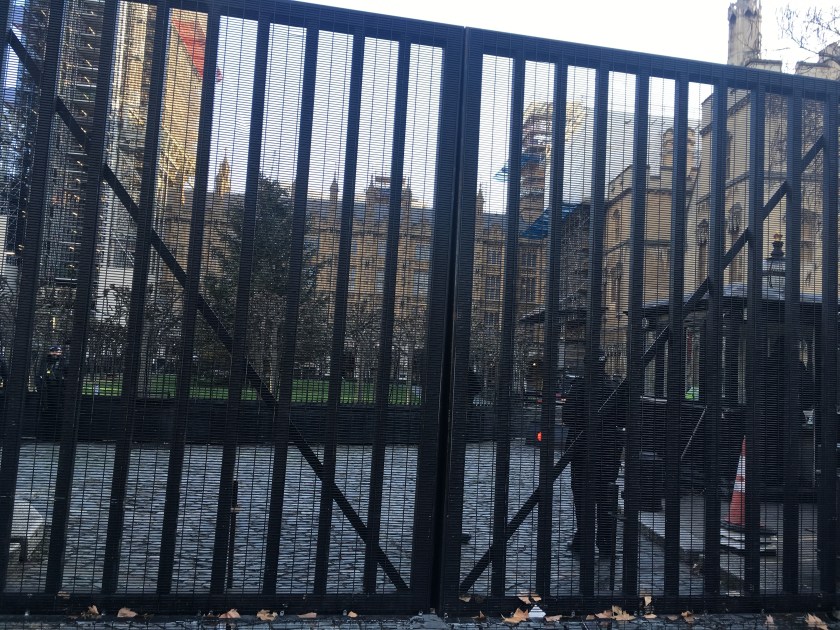
At the Cromwell Green entrance, I’m greeted by two members of staff, one of whom is basically like:
“Hiii. Ooh erm it’s a buggy. We’ve got a strict ‘no buggies allowed’ policy here. I mean, you can bring a buggy in but not up to the gallery. So erm, not sure how to say this but, no? *leans over* Cute baby though. Umm anyone else with you who can stay with baby while you watch the debate? No? Yeah, ok you can’t come in, sorry bye. *shouts* Maybe for a tour? But that’s only on the weekend. Thanks!!”
Wow.
I was armed with emails confirming that I could come in but I felt so paralysed by this “strict policy” that it seemed futile to even fight it and the last thing I wanted to do was get into an argument. So after a few meek suggestions such as, “can I leave the buggy and sling my baby” (Jo Swinson style), “no, sorry, the thing is children under 5 aren’t allowed so as to avoid any possible disturbances such as a baby crying”.
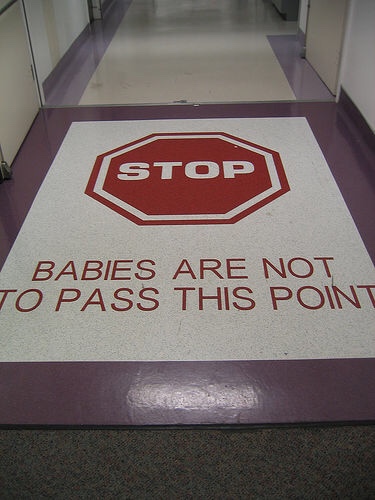
Gutted. Utterly gutted to hear the word “disturbances” used for the innocent pleas of a baby. To be guilty of something you can’t control, felt so wrong that I could only squint and purse my lips in response to the woman who had just told me that in no uncertain terms was I going to have an opportunity to see the debate I’d trekked over 8 miles to see. Slowly, I nodded, thanked them both – the male attendee especially, for checking with the gallery staff via his talkie-talkie.
Not being allowed into Parliament with my baby for fear that he’d be a “disturbance” was disappointing but strangely, it made sense to me. It made sense because I’m used to not feeling welcome with a baby. By now, I’m basically a pro in apologising for my baby just being a baby. So yeah, it made sense to me but then as I told my husband, my mum, my brother, my local MPs assistant via email and a contact of mine in Parliament via Twitter, their reactions showed me that actually it didn’t make sense. My local MPs assistant apologised immediately and I’m sure felt nearly gutted because she had literally called a contact in Parliament TWICE to confirm!
Anyway. That’s the thing about inequality, it makes sense, until it doesn’t.
It doesn’t make sense. I’d love to fight this but I don’t think I’ll put myself and my baby through that again just to fight it. I just want to observe a debate so my little one will have to be stuck with a bottle with someone else for an hour or two, the next time I want to cover a debate.
For now, I’ll still forge ahead with being a mum journo, just not at the same time.

“Don’t you ever give it a rest” asked Warren.
“Your fellow white citizens are fed up to the back teeth of being told by this particular privately educated, Oxbridge graduate how privileged they are. F*** you”, he continued.
And so it goes. The virtual vitriol directed at people like Afua Hirsch and anyone like her who dares stand in the face of racism and demand its ejection from our society.
If you’ve not heard of Afua Hirsch, I suggest you get your Google on, ASAP. She’s the author of best-selling book, Brit(ish). A book I’ve just embarked on and have already fallen in love with. I’ve been following Afua’s career for years now and am so pleased she’s produced a piece of work as apt, on the mark and gripping as Brit(ish). It’s not really a surprise though, she’s been consistently amazing. From holding her own up against somewhat unsavoury characters, on Sky’s The Pledge and her campaign to raise reassess the statues of figures from Britain’s imperial past was an important cause. Essentially she’s full of knowledge about all things race in the U.K., she is passionate about keeping things in check and for that I’m a fan – if you hadn’t noticed already. It helps that I’ve got things in common with Afua. Both British born and of Ghanaian-origin (she through her mother and I through both parents) and both feeling very much Brit-ish. But, even if we didn’t have any similarities, I’d still be interested in hearing what she’s got to say. The same cannot be said for our dear bud and Twitter-comrade, Warren.
For Warren, it’s all a little too much. You see, Warren would like nothing more than for Afua to just shut up. With all the inequality Afua likes to point out and topic of white privilege she brings up from time to time, it’s all just a massive inconvenience for Warren. Not the racial inequality itself though, no.
So to you, the condescendingly arrogant keyboard-warrior who told Afua Hirsch to do one and then demanded I explain why Afua Hirsch is less privileged than you are. This one’s for you.
“Don’t you ever give it a rest” was the first thing I saw from you. This was the first flag of your flagrant racism. You gave yourself away with that question and so I had you sussed well before your fourth tweet, where you tried to politely persuade me to engage in a debate with you. And rightly so. People looking to correct the balance of privilege should have no time for those who insist there isn’t an imbalance to begin with. People who try to berate those fighting for justice. People who are more offended by those discussing the cancer of racism in our society than treating the actual cancer itself. People who abuse the abused.
People like you, Warren.
According to you, your life and that of your “fellow white citizens” would be made more bearable if Afua et al just ‘gave it a rest’ clearly haven’t heard that silence is complicity. To be silent where there is injustice, is to be complicit. So no, Afua should not give it a rest. I will not give it a rest. We will not be shut up because you and your mates are ‘tired to the back teeth’. Get ready for a dental appointment, because your teeth might find they’re more than just tired.
We are tired. We are tired of the everyday racism. We are tired of both the overt and covert racism that is woven in the fabric of our society. We are tired of the microaggressions. We are tired of being paid far less than our white counterparts. We are tired of tasers being used on us far more. We are tired of being jailed more for crimes, that we commit at lower rates. We are tired of the many miscarriages in bringing killers of Black, Brown and Mixed-Race people to justice. We are tired of being “under-policed as victims and over-policed as suspects”. We are tired of being unemployed at higher rates. We are tired of our young leaving school and being paid less than the youngest among you. We are tired of the institutions that harp on about diversity but still aren’t very diverse. We are tired of the higher than average “permanent exclusion rates for Black and Mixed-Race pupils”. We are tired of the media that still hound our black football players. We are generally tired of hateful media campaigns and we are tired right along with Prince Harry for the “wave of abuse and harassment” the media dishes out to anyone with a smidgen of blackness. We are tired of the excessive force used on us by police. We are tired of the higher rates of prosecution and sentencing for Black people. We are tired of being victims of race hate crimes on Britain’s railway networks. We are tired of feeling unsafe in our local areas almost twice as much as our fellow white citizens. We are tired of the squalor, substandard, overcrowded and unsuitable accommodation our poorest are allowed to live in. We are very tired of being more likely to live in poverty. We are tired of our women having four times the mortality rate in healthcare despite making up a great number of NHS care staff. We are tired of being disproportionately held under mental health legislation. We are tired of our young men being stopped and searched at an entirely too high a rate. We are tired of our young black students facing insidious racism from their young white counterparts. We are particularly tired of racist abuse by hordes of white students in student halls across the nation. We are tired of the many workplaces which fail to equally pay their non-white members of staff the same as their white employees. We are tired of being stopped at customs by airport security far more than necessary and far more aggressively. We are tired to the back teeth of the unconscious and sometimes, very conscious bias of our fellow white citizens towards us. We are the ones who are tired.
All this, even when backed up with data, means nothing to Warren and the multitudes like him, who insist that white privilege doesn’t exist. It exists. White privilege is being arrested three or four times less than your black counterparts. White privilege is being more likely to be in full time employment. White privilege is being more likely to own your own home than other ethnic groups. White privilege is having higher attainment levels for reading, writing and maths than pupils other ethnic groups, despite being just as poor. White privilege is having Canary Wharf far less policed than Tottenham, despite more substance abuse taking place there. White privilege is having your drug-taking referred to as recreational drug use rather than being linked to gang activity. White privilege is to walk around without fearing for your life. I could go on…
But apparently, Afua has “had at least as good life chances as” yourself, you say? In fact, you feel she has “had far greater life chances than the vast majority of Working Class white people”. Warren asks, “is Ms Hirsch more or less privileged than the average white citizen of the UK?” This is the point where I injected myself into the conversation, with a meme of an exasperated Raven Symone (because, like I said, we are tired). That was my first mistake, because Warren then insisted that I explain “how a privately educated, Oxbridge graduate, who has media jobs others would give their right arms for (Afua Hirsch) is less privileged” than he is. He lets me know that he is “really willing to listen if” and only if, I “can provide a coherent answer” and God forbid I respond with a meme. No, no, no. No memes because this isn’t Twitter or anything.
The entitlement. The sheer entitlement of it all. So I commit my next sin by letting Warren know that when Afua was a teen she was kicked out of a shop in her local area for not being the “type” of person” they served. Against my better judgement, I asked if he’d ever be on the receiving end of such treatment. Obviously he hadn’t, because the very reason this happened to Afua was because of her perceived blackness. Bad idea.
“I was going to write, “no, of course not.” Then I remembered I sometimes got refused service in restaurants when I was younger. Presumably, to do with the way I spoke, dressed, acted … It happened more than a few times” responded Warren.
I could sense that Warren had felt he’d triumphed in what I realised this debate now was: Oppression Olympics. My third and final mistake was this: “occurrences like that happen more than a few times when you’re of a darker hue. Believe me. As you’ve pointed out, it could’ve been your way of speaking among other things. All things you can change to reduce racial bias against you. Can you change your race,” I asked.
Still the point was lost on my Twitter comrade. He quipped back that I and another Twitter were ‘obtuse’ (love that word) “to not know that a privately educated Oxbridge graduate has far greater chances than the rest of the population, irrespective of their skin colour”. To that, I say, class differences can transcend racial barriers. That is why most Black parents raise their children to work twice as hard so that despite your blackness or mixed-raceness, you can still have a decent place in society. That’s only the theory though. In practice, the success stories are still few and far between. So yes, your question was offensive. Particularly for it’s ignorance. Did you forget that the odds are heavily stacked against Black, Brown and even Mixed-race people and are mostly in the favour of White, often irrespective of which class they fall into? Despite Afua’s pedigree, pick any FTSE 100 company boardroom, fill them with clients, and I guarantee that if you and Afua walked in together, you would be perceived completely differently thanks to skin colour alone. Why? Because you are white and male. Need I say more???
Your offensive assumptions that Afua’s “white side” got her the “best education money could buy, the right contacts and accent” and her “black side” doing nothing more for her than allowing her to “fill token minority positions” shows that you understand White privilege very well. About Afua’s place in society, I implore you to understand one thing: it was achieved through the hard-work, determination and grit of both of her immigrant parents, not her white side or black side, as you so callously put it as if we were talking about a coin rather than a human being.
Being Black or mixed race, isn’t a gravy train for filling up minority positions, the institutionalised racial discrimination and systemic racism across the board in the UK, is not a perception, paranoia or simple politics of black and brown people who detail their experiences of it. For us, it’s not an assumption and it is definitely not a figment of our imagination. It is real and it really doesn’t matter if you’re fully black and brown or mixed-race, because the one-drop rule isn’t just an American thing.
As I close this letter, I hope it has answered your burning questions about privilege. If it hasn’t, you would do well to buy Afua’s book, Brit-ish as this will inevitably answer some, if not all, your questions around privilege. I stress the point once more: if you are discerning enough you’ll notice very quickly that Afua’s privilege wasn’t down to the miracle of being half white, it was down to both of her hardworking parents. So instead of assuming, buy the book. Once you’ve read the book, I hope you’ll stop being obtuse and really get it together. With life being as short enough as it already is, do you seriously think a privately educated individual would bother wasting time talking about racial issues, with the tenacity and conviction that Afua does, if we had racial equilibrium? The answer is a resounding, no – she wouldn’t.
So ask yourself, if Afua and those like her aren’t wrong or lying about the struggles they face due to their race, then why do I have such a problem with them trying to get rid of it? Really ask yourself why people like you are more offended by those calling out racism, such as Ms Hirsch, than the actual racism itself. Why are you more offended by the mention of your privilege than the very obvious privilege that plagues our society?
Sincerely,
Sources:
https://www.equalityhumanrights.com/en/latest-projects/race-report-statistics
In this my first “Podcast Sound Off” post, I’d like to talk about a podcast called Consensus – find more about it here
Like surfing the internet, perusing through Twitter, depending on how far the rabbit-hole you venture, could be an either potentially beneficial or rewardlessly time-consuming activity. Either way, it’s something I’d still recommend that you allow yourself to do, when you have free time of course, because you never know what you might find.
For me, last week it was a political podcast hosted by seven women of Afro-Caribbean and Mixed race heritage, called Consensus. The brilliant hosts are all in politics in some way shape or form. What makes them unique is that each of these young women represent or support a different strand of U.K. politics, they are women working in the Westminster bubble, oh and they’re Black.
Given that the number of ethnic minority MP’s is just 4.2% of the total, it is incredibly important that voices of people from underrepresented backgrounds are projected and heard.
I came across this podcast by just being on my Twitter timeline. A tweet, which I can only describe as a call to action, was reposted onto my timeline – the tweet said:
I really need black journalists to come to Parliament and write about some of the debates/ issues happening here.” – @JennaNDavis_
Brilliant, right? So direct and to the point. Loved it because this was a call to action for more Black journalists and more Black voices to be in Westminster and in Parliament, listening to what’s going on, listening to the debates, listening to the bills being discussed, being present, being observant of what’s going on, being an avenue of information by commenting on those things and keeping the discussion in the public fora. But most importantly, in the consciousness of anyone of African and Caribbean heritage.
I jumped at the opportunity to find out more, so I hurriedly fired back a tweet asking whether bloggers could do the same. I’m not a journalist, I don’t currently write for any publications but I thought, ‘could I in some way do something?’ I’ve got a blog now and I really do feel like I have a voice and more importantly, I’m confident about the voice I have. I never used to be. I used to think, “oh I’m just a small girl from The Cally, of Ghanaian descent and that’s about it, you know, like, who is going to listen to me really?!” But I’m a mum now, I’ve being a working contributing member of society for the better part of a decade since I finished school and graduated, I pay my taxes I know that that figure deducted from my pay comes from my hard work which goes back into the system to make a difference.
So for me, it’s very important that my voice is heard and if I have concerns about the society I contribute to, I must raise them. We all should. I’m no different to the MPs in Parliament, none of us are; those MPs we see gallivanting around were at one point dreaming and hoping to have their voices heard and now they do.
As someone who has created a blog to comment on social structures, changes and current affairs, I can use this platform to get involved. So with that curiosity in mind, I got in touch via direct message (DM) with Jenna Davis, who is one seventh of The Consensus podcast. She quite generously gave me loads of info about attending parliamentary debates and joining all-party parliamentary groups.
Funny, informative, thought-provoking, and a great concise way to learn about the political landscape, the Consensus podcast has been a great reminder for me that so many more voices need to be heard, and that representation matters.
To get more involved:
– Attend debates at Westminster Hall
– Get in touch with your local MP about attending debates
– Keep up to date with All-Party Parliamentary groups (APPGs) of interest to you

 Jacqueline Courtenay