Climate change called, it said: People of the Earth, you can now freak out!!!

Excuse my language but we’re f****d.

If you’re reading this, you are f****d. Your friends, your family, your way of life, your future, and worst of all, your children. Your beautiful, precious child or children are f****d.  I’m a mum and my worst nightmare is that my children will live in a world worse than the one I’ve known and have had the privilege of growing up in.

Why are we f*****d? Well, the UN released a report the other day, saying we have 12 years to stop climate change. And this article by David Wallace-Wells for NY Mag, gave us the right to officially start freaking the f*** out with its breakdown of just how close we are to the point of no return.

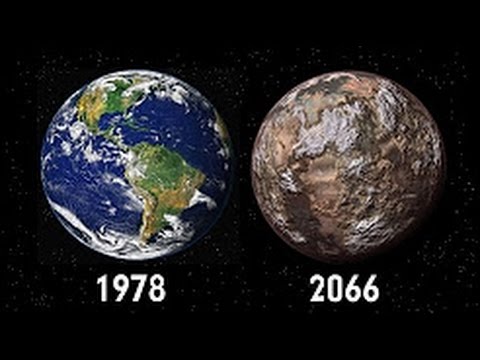
Yesterday, I saw the photo below posted on Facebook. It was also my son’s christening, so as soon as I saw it, just as quickly did I lose interest and carry on about my day. I’m at home today, no pressing deadlines, no party to arrange, no playdates to go to and so I’m at home and I have the time to write.

Image result for planet in 2066

I have several posts in drafts but I haven’t published them because none of the issues seem pressing enough. To be honest, at this present moment, nothing seems as urgent as climate change. I couldn’t care less about Brexit because being in the EU would help our collective fight against climate change than being outside of it. I couldn’t care less about the latest silly thing *insert pseudo-celebrity here* has said. I care about and am passionate a tonne of issues facing the most vulnerable in our world today. But honestly, none of the other issues on my heart, are as pressing as the state of our climate. The planet needs to be seen to before we can worry about anything else.

So all in all, it’s suffice to say, I’ve had an awful day. I’ve been thinking non-stop about the current situation, just how dire it is and what little old me can do about it. My conclusion is always the same; the fact is our climate is in a perilous state. Our collective future is at an unfathomable risk and the time we have to undo the danger is rapidly reducing.

The danger is completely man-made. Like, we’ve done it. We’ve created this: Human-caused Climate Change, which started way back in the 1830s, and, if it were a telephone call, it would’ve been on hold for the past 188 years. I would never dream of keeping anyone on hold for more than 5 mins. When it comes to climate change, we cannot continue to keep it on hold.

Years ago, as an A Level student I took a book out from my old local library called, ‘The Case Against the Global Economy For A Turn Towards Localization‘. The book changed the way I viewed globalisation. It convinced me that to help save the world, you’ll need to take a turn towards localisation. I’ve tried. I buy my fruit and veg locally from a great social enterprise called, Organiclea and I’m advocate for anywhere that promotes refill-consumerism such as my local, Second Nature on Wood Street, London E17.

One of the Amazon reviews left for the book, pretty much sums up how I feel:

“The book describes all aspects of globalization and what it means to us as citizens of this earth. Most of the essays leave one feeling impassioned to do something to change the course of the way things are going”

As the day is drawing to a close, I’m reviewing my actions today and I’m not proud to say that I’ve been utterly wrapped up in my emotions and my fears about the future. Which has helped no one.

However, some good might have come from my low mood because it’s inspired me to strive to be on the right side of history.

Stay tuned to find out more…

Remembering The Forgotten

The Why: Today’s post is inspired by David Olusoga’s Armistice 100 piece for The Guardian, ‘Black soldiers were expendable – then forgotten’ Find here

Today, November 11th 2018, is the centenary anniversary of the end of WW1, on November 11th 1918.

A monumental day. Why? Because it was the day when previously upright guns, which had been pointed at enemies, were positioned downward and let go of. It was the day which marked the end of enormous bloodshed and anguish. It was the day that brought with it an end to a war that should never have took place at all. For the magnitude and vastness of the war, it is fitting that the 100th anniversary of the day the world’s first truly global war ended, is remembered.

A pivotal day. Which for every November 11th in my living memory, I’ve been told  marked the beginning of peace. On the day of Armistice itself in 1918, Trafalgar Square was chock-a-block with solid crowds, people were dancing having a wonderful time, and joyfully crying out down the Strand, “the war is over”. In this modern age, we don’t look back with quite as much exuberance, but we do look back at it full of pride for those who gave their lives for Queen and country. Of course, it is important to remember those who selflessly sacrificed their today for our tomorrow.

However, this post speaks to something potentially even worse than the war itself. Today, I look back at the soldiers from Africa and Asia who were repaid “evil for good” (1 Peter 3:9) and were sorely mistreated after the war. This post speaks to the immediate amnesia that occured in the hearts and minds of everyday white people in Europe and the US after armistice was called. Long before the war ended, Germany, perhaps seeing that it’s loss was imminent, set about ‘fabricating a series of atrocity stories’ to help build the case against Britain and France’s deployment of non-white combatants. As the central powers and allied countries continued to engage in 52 months of bloodshed, theorists such as Lothrop Stoddard, an American racial commentator expressed that the white world had been weakened and previously tamed races had been partially unchained and therefore threatened the white supremist world order. He condemned the giving of guns to men of black and brown skin for this had been permission to kill the blessed white man. If this doesn’t scream, ‘Black lives DON’T matter’, then I don’t know what does, because even in war let’s perish the thought that a black person dares to defend their lowly lives against a white person.

From the everyday man to trade unions and governments, the behaviour towards non-white participants of the war was incredibly ungrateful. Their very lives would have been completely different had they lost the war against Russia, Germany and the Ottoman forces. Their lives are directly attributable to the involvement of colonial soldiers and sailors of Afro-Caribbean descent who served during the war. However, as Olusoga writes, nine race riots took place in Britain in 1919; in that same year, at least 19 African American soldiers were lynched in the US for wearing army uniforms in public; in 26 American cities, black communities were attacked and people murdered in the streets. The South Shields community of the UK, included soldiers of South Asia were victims of the first race riot in the UK. Due to these disturbances, these war veterans had to be immigrants were evacuated to their homelands. Olusoga has educated me this morning on “…the role played by the four million non-white non-Europeans who fought and laboured on the western front – and in other theatres of the war in Africa, the Middle East and Asia…” He makes it abundantly clear that all this effort has been airbrushed from popular memory.

Today’s headlines, services and appeals to remember make this crystal clear. Today I controversially say, I’m quite comfortable with mainstream media forgetting these players of darker hues because their involvement in WWI was never meant to be honourable. Their involvement was steeped in horrible racial theory of their primitivity. For example, the French had decided to deploy West Africans because they were apparently more primitive than Europeans and could, somehow, better handle the shock and pain of battle. Similar views were held by the British of the Indian men they had called to action. The black and brown people of World War 1 were ‘two-and-a-half times more likely to be killed in action than white French infantrymen’. Of course, the colonial insurgents were killed at a higher rate because their presence served to reduce the number of white deaths there otherwise would have been had Britain and France fought on their own.

Today, I don’t need the British media to just remember the African and Asian men who obeyed calls to fight for the Allied forces and the Central Powers. I need the British media to do much more than that. I call on the British government and media to condemn the European powers who fought to ensure that the hearts and minds of whites across the UK, US, the Caribbean and South Africa were hardened enough to initiate race riots as soon as the war ended. I need the British media to remember the barbaric and mentally-fragile white communities of Britain who abused war veterans of African descent and their families. I need the British media to make it abundantly clear that the end of WWI was never designed to bring about peace for all. For some, it was the beginning of ‘red summers’, murders and violent attacks of white gangs against the people like Charles Wooten, a black sailor who had served in the war, who was lynched by a Liverpudlian mob.

Let’s not forget. Let’s not forget the terrible fate of the non-white men who obediently accepted the call to defend foreign nations, in a war these men had no business in participating in. Let’s not forget the terrible racial theory of the white nations who recruited non-white soldiers and placed them on front lines and accelerated their deaths to buffer the deaths of white soldiers. Let’s not forget the terrible behaviours of white citizens who set about on killing sprees against the very people who almost gave up their lives for the freedom of those same white citizens. Let’s not forget the fragility of whiteness in its attempt to discredit the participation of non-white soldiers. Let’s not forget that if you are British, French or American, you owe your freedom to people from West Africa, India and China. Let’s not forget.

Regardless of which side they stood on, be it on the side of the Central Powers or on the side of the Allies, today, I remember the mistreated surviving soldiers from Africa (Algeria, Benin, Burkina Faso, Cameroon, Chad, Congo, Gabon, Ghana, Guinea, Ivory Coast, Kenya, Madagascar, Malawi, Mali, Morocco, Mozambique, Namibia, Niger, Nigeria, Rwanda, Senegal, Sierra Leone, Tanzania, Togo, Tunisia, Uganda, Zambia and Zimbabwe) and Asia (China, India, Nepal, Vietnam) some of whom decided to live in the very countries they defended, but were met with race riots: a war of a different kind.

Lest we forget.

Let’s not forget.

Sources:

https://www.theguardian.com/world/2018/nov/11/david-olusoga-black-soldiers-first-world-war-expendable

https://en.wikipedia.org/wiki/World_War_I_casualties


A girl from the Cally.

“Let me tell you about a place called the Cally” – Jacqui Courtenay, 2018

Caledonian Road or the Cally, as its affectionately called by locals, is a long road stretching from Kings Cross to Holloway in the London borough of Islington. With the Bury’s to the east (i.e., Highbury, Barnsbury and Canonbury) and punk-home, Camden to the left, the Cally is a unique place.

Arriving in 1990, my mum, pregnant with me, found herself a one bedroom flat in the infamous Bemerton Estate just off Caledonian road. She’s lived there ever since. The estate and the local area does have a bit of a bad reputation so growing up there in the 90’s gave me all the grit I needed to survive anywhere! Rough around the edges, is our Cally. In the glory days of the 90s, the Cally wasn’t the knife crime hotspot it is now but it wasn’t picturesque either – it was a hotspot for drugs and an extension of Kings Cross’ red light district, it always felt a bit dark even for a child but thanks to my naivete, I never associated it with drugs. Perhaps my mum just did an excellent job at shielding me from the harsh reality outside of our home? Maybe. That said, I would spend entire summer days playing out and running round the blocks of the Bemerton playing knock-down-ginger with friends in the corridors of the many blocks completely freely, so perhaps it wasn’t that bad at all. Nonetheless, it was definitely a fun place to be, so it came as a surprise to me when I started to learn that my Cally was known for more than just the teenage gangs who rode around on their mopeds.

Interestingly, as surrounding areas have changed, in the almost 30 years my mum has lived on the road, it hasn’t changed much at all. The Cally is still home to immense inequality on the one hand and extreme deprivation on the other. The newly redeveloped and regenerated Kings Cross is a mere stone’s throw away but it couldn’t feel further away when you’re on the Cally. The inequality of this one road in London, speaks to a phenomenon that has been rippling through the capital for many years now. A phenomenon known as, Gentrification. Or “Super-Gentrification”, as Faiza Shaheen puts it in an article about the shocking inequality in Islington. Thanks to super-gentrification, places like the Cally are quickly being forgotten, along with their uniqueness, quirkiness, history, intrigue and worst of all, the people are being shipped out.

Despite being born and bred in the Cally, when it came time to move out of my mum’s when I got married, my husband and I just couldn’t dream of affording to live there. Oh how we miss the ease of commuting into the City via Kings Cross in 20 mins flat (if you’ve ever travelled in Kings Cross during rush hour, you’ll know it’s nothing short of the Olympics – but living near the station is a special kind of privilege). We had to move a decent way out to get some bang for our buck and that was a truly bitter pill to swallow. Not being able to raise your family in the same place you grew up is strange and moving way out, like we did, for me anyway, came with a sense of feeling a bit like a refugee. Almost three years on and I’m only just starting to feel used to our local area in east London. I’m not good with change but it’s also not being helped by the super-gentrification happening in my new part of town! Honestly, you can’t get away from it.

Sigh.

Gentrification. Inequality. Council-homes. Crime. Regeneration. It’s all abit too much.

I’ll come back to all this another day. For now, I’ve got to get to my four month old and two year old who need some fresh air – come rain or shine.

Cheers,

Jacqui

There’s a first for everything…

Hi, I’m Jacqui and thanks for joining me!

Good company in a journey makes the way seem shorter. — Izaak Walton

post

Quite right, Izaak Walton. I’ve never heard of you but those are very wise words. Good company, is what I hope this will be. We shall see…

Thanks to WordPress’ automated theme template, I’ve got a snazzy quote at the beginning of my very first ever blog post accompanied by a snazzy shot of the sea and a beautiful sunset (or rise, depending on your perspective). The quote is not too bad at all and neither is the stock image above, so I’ve decided I’m keeping them.

Anyway, anyway, anyway, it’s the first of November 2018, this is my first blog post and the view out my window is nowhere near as pretty as that sun-set-rise above. In fact, it’s a very rainy day in east London where I live. Actually, if I was trying to be all artsy, I probably should’ve started the post with the following image…

blog1-image2
01/11/2018. View, not from a bridge, but from my window. Rain and a red bus. Oh so very London.

But whilst art is one of my passions, art this blog is not.

So if this isn’t about art or my general interests then what is it about? In other words, why have I set up a blog? In short, I’ve set up a blog because I have something to say about society. How broad, ambiguous and inconspicuous is that, ay? Very. So to be specific, my answer is…I’ve got something to say about the state of our society. Still too broad? Right, well to be extra clear –

I’ve created this blog to house my thoughts on the state of our society as it relates to an invisible concept that we all live by: The Social Contract

Something tells me that I've gone back to being all broad and ambiguous again. Hopefully I've not lost you. Sorry if I have...

The Social Contract is something, well actually it’s a school of thought and a theory, that I’m quite vested in. I’m not entirely sure why but I’m just very interested in the idea that our society is founded upon the belief that we (i.e., members of society) have given up our natural rights to be part of something bigger, better and safer (i.e., society). The odd thing is, we’ve given up our society to the control of democratically elected bodies (i.e., government) to rule over and protect us from harm. Sounds pretty straightforward but for some reason, within that definition of society or the contract that allows us to live in it, I’ve got so many questions. Not just questions, but thoughts too. Such as: does our government hold up it’s end of the bargain? OR, does the social contract need to be rewritten? etc…

This blog is just my little part of the internet from which I’ll ask my questions and leave my thoughts.

This blog is where I’ll talk about the state of our social contract, the state of our society and the state of our consciousness about our society.

This blog is where you can disagree, agree, argue, criticise or just observe my thoughts and questions about all things: ethics, liberty, power, class, race, greed, hubris, equality and the current affairs of society. So vague! But whatever, I’m not deleting that line because I like it.  It tells you about the things I like to talk and think about, so it’s staying put :).

I hope you’re staying too. See you in the next post, if you are.

Cheers,

Jacqui

P.S., I’ve got a degree in Business Management and Accounting. In my third year, one of my modules involved the study of Corporate Collapse, within which we looked at ethics and the causes of business failure. In one of the more memorable lectures, we were introduced to this concept of the Social Contract from the perspective of 17th century philsopher, Jean Jacques Rousseau. So yeah, that’s where this 20-something year old, London mum who works in the City got all this society and social contract spiel from.