Dear Warren and those tired of hearing about privilege…

“Don’t you ever give it a rest” asked Warren.

Your fellow white citizens are fed up to the back teeth of being told by this particular privately educated, Oxbridge graduate how privileged they are. F*** you”, he continued.

And so it goes. The virtual vitriol directed at people like Afua Hirsch and anyone like her who dares stand in the face of racism and demand its ejection from our society.

If you’ve not heard of Afua Hirsch, I suggest you get your Google on, ASAP. She’s the author of best-selling book, Brit(ish). A book I’ve just embarked on and have already fallen in love with. I’ve been following Afua’s career for years now and am so pleased she’s produced a piece of work as apt, on the mark and gripping as Brit(ish). It’s not really a surprise though, she’s been consistently amazing. From holding her own up against somewhat unsavoury characters, on Sky’s The Pledge and her campaign to raise reassess the statues of figures from Britain’s imperial past was an important cause. Essentially she’s full of knowledge about all things race in the U.K., she is passionate about keeping things in check and for that I’m a fan – if you hadn’t noticed already. It helps that I’ve got things in common with Afua. Both British born and of Ghanaian-origin (she through her mother and I through both parents) and both feeling very much Brit-ish. But, even if we didn’t have any similarities, I’d still be interested in hearing what she’s got to say. The same cannot be said for our dear bud and Twitter-comrade, Warren.

For Warren, it’s all a little too much. You see, Warren would like nothing more than for Afua to just shut up. With all the inequality Afua likes to point out and topic of white privilege she brings up from time to time, it’s all just a massive inconvenience for Warren. Not the racial inequality itself though, no.

So to you, the condescendingly arrogant keyboard-warrior who told Afua Hirsch to do one and then demanded I explain why Afua Hirsch is less privileged than you are. This one’s for you.

“Don’t you ever give it a rest” was the first thing I saw from you. This was the first flag of your flagrant racism. You gave yourself away with that question and so I had you sussed well before your fourth tweet, where you tried to politely persuade me to engage in a debate with you. And rightly so. People looking to correct the balance of privilege should have no time for those who insist there isn’t an imbalance to begin with. People who try to berate those fighting for justice. People who are more offended by those discussing the cancer of racism in our society than treating the actual cancer itself. People who abuse the abused.

People like you, Warren.

According to you, your life and that of your “fellow white citizens” would be made more bearable if Afua et al just ‘gave it a rest’ clearly haven’t heard that silence is complicity. To be silent where there is injustice, is to be complicit. So no, Afua should not give it a rest. I will not give it a rest. We will not be shut up because you and your mates are ‘tired to the back teeth’. Get ready for a dental appointment, because your teeth might find they’re more than just tired.

We are tired. We are tired of the everyday racism. We are tired of both the overt and covert racism that is woven in the fabric of our society. We are tired of the microaggressions. We are tired of being paid far less than our white counterparts. We are tired of tasers being used on us far more. We are tired of being jailed more for crimes, that we commit at lower rates. We are tired of the many miscarriages in bringing killers of Black, Brown and Mixed-Race people to justice. We are tired of being “under-policed as victims and over-policed as suspects”. We are tired of being unemployed at higher rates. We are tired of our young leaving school and being paid less than the youngest among you. We are tired of the institutions that harp on about diversity but still aren’t very diverse. We are tired of the higher than average “permanent exclusion rates for Black and Mixed-Race pupils”. We are tired of the media that still hound our black football players. We are generally tired of hateful media campaigns and we are tired right along with Prince Harry for the “wave of abuse and harassment” the media dishes out to anyone with a smidgen of blackness. We are tired of the excessive force used on us by police. We are tired of the higher rates of prosecution and sentencing for Black people. We are tired of being victims of race hate crimes on Britain’s railway networks. We are tired of feeling unsafe in our local areas almost twice as much as our fellow white citizens. We are tired of the squalor,  substandard, overcrowded and unsuitable accommodation our poorest are allowed to live in. We are very tired of being more likely to live in poverty. We are tired of our women having four times the mortality rate in healthcare despite making up a great number of NHS care staff. We are tired of being disproportionately held under mental health legislation.  We are tired of our young men being stopped and searched at an entirely too high a rate. We are tired of our young black students facing insidious racism from their young white counterparts. We are particularly tired of racist abuse by hordes of white students in student halls across the nation. We are tired of the many workplaces which fail to equally pay their non-white members of staff the same as their white employees. We are tired of being stopped at customs by airport security far more than necessary and far more aggressively. We are tired to the back teeth of the unconscious and sometimes, very conscious bias of our fellow white citizens towards us. We are the ones who are tired.

All this, even when backed up with data, means nothing to Warren and the multitudes like him, who insist that white privilege doesn’t exist. It exists. White privilege is being arrested three or four times less than your black counterparts. White privilege is being more likely to be in full time employment. White privilege is being more likely to own your own home than other ethnic groups. White privilege is having higher attainment levels for reading, writing and maths than pupils other ethnic groups, despite being just as poor. White privilege is having Canary Wharf far less policed than Tottenham, despite more substance abuse taking place there. White privilege is having your drug-taking referred to as recreational drug use rather than being linked to gang activity. White privilege is to walk around without fearing for your life. I could go on…

But apparently, Afua has “had at least as good life chances as” yourself, you say? In fact, you feel she has “had far greater life chances than the vast majority of Working Class white people”. Warren asks, “is Ms Hirsch more or less privileged than the average white citizen of the UK?” This is the point where I injected myself into the conversation, with a meme of an exasperated Raven Symone (because, like I said, we are tired). That was my first mistake, because Warren then insisted that I explain “how a privately educated, Oxbridge graduate, who has media jobs others would give their right arms for (Afua Hirsch) is less privileged” than he is. He lets me know that he is “really willing to listen if” and only if, I “can provide a coherent answer” and God forbid I respond with a meme. No, no, no. No memes because this isn’t Twitter or anything.

The entitlement. The sheer entitlement of it all. So I commit my next sin by letting Warren know that when Afua was a teen she was kicked out of a shop in her local area for not being the “type” of person” they served. Against my better judgement, I asked if he’d ever be on the receiving end of such treatment. Obviously he hadn’t, because the very reason this happened to Afua was because of her perceived blackness. Bad idea.

“I was going to write, “no, of course not.” Then I remembered I sometimes got refused service in restaurants when I was younger. Presumably, to do with the way I spoke, dressed, acted … It happened more than a few times” responded Warren.

I could sense that Warren had felt he’d triumphed in what I realised this debate now was: Oppression Olympics. My third and final mistake was this: “occurrences like that happen more than a few times when you’re of a darker hue. Believe me. As you’ve pointed out, it could’ve been your way of speaking among other things. All things you can change to reduce racial bias against you. Can you change your race,” I asked.

Still the point was lost on my Twitter comrade. He quipped back that I and another Twitter were ‘obtuse’ (love that word) “to not know that a privately educated Oxbridge graduate has far greater chances than the rest of the population, irrespective of their skin colour”. To that, I say, class differences can transcend racial barriers. That is why most Black parents raise their children to work twice as hard so that despite your blackness or mixed-raceness, you can still have a decent place in society. That’s only the theory though. In practice, the success stories are still few and far between. So yes, your question was offensive. Particularly for it’s ignorance. Did you forget that the odds are heavily stacked against Black, Brown and even Mixed-race people and are mostly in the favour of White, often irrespective of which class they fall into? Despite Afua’s pedigree, pick any FTSE 100 company boardroom, fill them with clients, and I guarantee that if you and Afua walked in together, you would be perceived completely differently thanks to skin colour alone. Why? Because you are white and male. Need I say more???

Your offensive assumptions that Afua’s “white side” got her the “best education money could buy, the right contacts and accent” and her “black side” doing nothing more for her than allowing her to “fill token minority positions” shows that you understand White privilege very well. About Afua’s place in society, I implore you to understand one thing: it was achieved through the hard-work, determination and grit of both of her immigrant parents, not her white side or black side, as you so callously put it as if we were talking about a coin rather than a human being.

Being Black or mixed race, isn’t a gravy train for filling up minority positions, the institutionalised racial discrimination and systemic racism across the board in the UK, is not a perception, paranoia or simple politics of black and brown people who detail their experiences of it. For us, it’s not an assumption and it is definitely not a figment of our imagination. It is real and it really doesn’t matter if you’re fully black and brown or mixed-race, because the one-drop rule isn’t just an American thing.

As I close this letter, I hope it has answered your burning questions about privilege. If it hasn’t, you would do well to buy Afua’s book, Brit-ish as this will inevitably answer some, if not all, your questions around privilege. I stress the point once more: if you are discerning enough you’ll notice very quickly that Afua’s privilege wasn’t down to the miracle of being half white, it was down to both of her hardworking parents. So instead of assuming, buy the book. Once you’ve read the book, I hope you’ll stop being obtuse and really get it together. With life being as short enough as it already is, do you seriously think a privately educated individual would bother wasting time talking about racial issues, with the tenacity and conviction that Afua does, if we had racial equilibrium? The answer is a resounding, no – she wouldn’t.

So ask yourself, if Afua and those like her aren’t wrong or lying about the struggles they face due to their race, then why do I have such a problem with them trying to get rid of it? Really ask yourself why people like you are more offended by those calling out racism, such as Ms Hirsch, than the actual racism itself. Why are you more offended by the mention of your privilege than the very obvious privilege that plagues our society?

Sincerely,

Jacqui


Sources:

https://www.equalityhumanrights.com/en/latest-projects/race-report-statistics
https://www.bbc.co.uk/news/uk-england-london-44376688

https://www.theguardian.com/uk-news/2018/dec/05/met-police-use-tasers-and-restraints-more-often-against-black-people

Podcast Sound-Off: Consenus Podcast

In this my first “Podcast Sound Off” post, I’d like to talk about a podcast called Consensus – find more about it here


Like surfing the internet, perusing through Twitter, depending on how far the rabbit-hole you venture, could be an either potentially beneficial or rewardlessly time-consuming activity. Either way, it’s something I’d still recommend that you allow yourself to do, when you have free time of course, because you never know what you might find.

For me, last week it was a political podcast hosted by seven women of Afro-Caribbean and Mixed race heritage, called Consensus. The brilliant hosts are all in politics in some way shape or form. What makes them unique is that each of these young women represent or support a different strand of U.K. politics, they are women working in the Westminster bubble, oh and they’re Black.

Given that the number of ethnic minority MP’s is just 4.2% of the total, it is incredibly important that voices of people from underrepresented backgrounds are projected and heard.

I came across this podcast by just being on my Twitter timeline. A tweet, which I can only describe as a call to action, was reposted onto my timeline – the tweet said:

I really need black journalists to come to Parliament and write about some of the debates/ issues happening here.” – @JennaNDavis_

Brilliant, right? So direct and to the point. Loved it because this was a call to action for more Black journalists and more Black voices to be in Westminster and in Parliament, listening to what’s going on, listening to the debates, listening to the bills being discussed, being present, being observant of what’s going on, being an avenue of information by commenting on those things and keeping the discussion in the public fora. But most importantly, in the consciousness of anyone of African and Caribbean heritage.

I jumped at the opportunity to find out more, so I hurriedly fired back a tweet asking whether bloggers could do the same. I’m not a journalist, I don’t currently write for any publications but I thought, ‘could I in some way do something?’ I’ve got a blog now and I really do feel like I have a voice and more importantly, I’m confident about the voice I have. I never used to be. I used to think, “oh I’m just a small girl from The Cally, of Ghanaian descent and that’s about it, you know, like, who is going to listen to me really?!” But I’m a mum now, I’ve being a working contributing member of society for the better part of a decade since I finished school and graduated, I pay my taxes I know that that figure deducted from my pay comes from my hard work which goes back into the system to make a difference.

So for me, it’s very important that my voice is heard and if I have concerns about the society I contribute to, I must raise them. We all should. I’m no different to the MPs in Parliament, none of us are; those MPs we see gallivanting around were at one point dreaming and hoping to have their voices heard and now they do.

As someone who has created a blog to comment on social structures, changes and current affairs, I can use this platform to get involved. So with that curiosity in mind, I got in touch via direct message (DM) with Jenna Davis, who is one seventh of The Consensus podcast. She quite generously gave me loads of info about attending parliamentary debates and joining all-party parliamentary groups.

Funny, informative, thought-provoking, and a great concise way to learn about the political landscape, the Consensus podcast has been a great reminder for me that so many more voices need to be heard, and that representation matters.


To get more involved:

– Attend debates at Westminster Hall

– Get in touch with your local MP about attending debates

– Keep up to date with All-Party Parliamentary groups (APPGs) of interest to you

Climate change called, it said: People of the Earth, you can now freak out!!!

Excuse my language but we’re f****d.

If you’re reading this, you are f****d. Your friends, your family, your way of life, your future, and worst of all, your children. Your beautiful, precious child or children are f****d.  I’m a mum and my worst nightmare is that my children will live in a world worse than the one I’ve known and have had the privilege of growing up in.

Why are we f*****d? Well, the UN released a report the other day, saying we have 12 years to stop climate change. And this article by David Wallace-Wells for NY Mag, gave us the right to officially start freaking the f*** out with its breakdown of just how close we are to the point of no return.

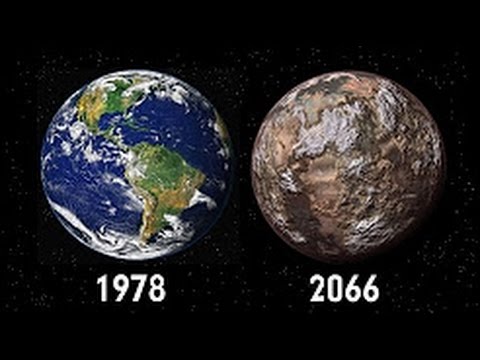
Yesterday, I saw the photo below posted on Facebook. It was also my son’s christening, so as soon as I saw it, just as quickly did I lose interest and carry on about my day. I’m at home today, no pressing deadlines, no party to arrange, no playdates to go to and so I’m at home and I have the time to write.

Image result for planet in 2066

I have several posts in drafts but I haven’t published them because none of the issues seem pressing enough. To be honest, at this present moment, nothing seems as urgent as climate change. I couldn’t care less about Brexit because being in the EU would help our collective fight against climate change than being outside of it. I couldn’t care less about the latest silly thing *insert pseudo-celebrity here* has said. I care about and am passionate a tonne of issues facing the most vulnerable in our world today. But honestly, none of the other issues on my heart, are as pressing as the state of our climate. The planet needs to be seen to before we can worry about anything else.

So all in all, it’s suffice to say, I’ve had an awful day. I’ve been thinking non-stop about the current situation, just how dire it is and what little old me can do about it. My conclusion is always the same; the fact is our climate is in a perilous state. Our collective future is at an unfathomable risk and the time we have to undo the danger is rapidly reducing.

The danger is completely man-made. Like, we’ve done it. We’ve created this: Human-caused Climate Change, which started way back in the 1830s, and, if it were a telephone call, it would’ve been on hold for the past 188 years. I would never dream of keeping anyone on hold for more than 5 mins. When it comes to climate change, we cannot continue to keep it on hold.

Years ago, as an A Level student I took a book out from my old local library called, ‘The Case Against the Global Economy For A Turn Towards Localization‘. The book changed the way I viewed globalisation. It convinced me that to help save the world, you’ll need to take a turn towards localisation. I’ve tried. I buy my fruit and veg locally from a great social enterprise called, Organiclea and I’m advocate for anywhere that promotes refill-consumerism such as my local, Second Nature on Wood Street, London E17.

One of the Amazon reviews left for the book, pretty much sums up how I feel:

“The book describes all aspects of globalization and what it means to us as citizens of this earth. Most of the essays leave one feeling impassioned to do something to change the course of the way things are going”

As the day is drawing to a close, I’m reviewing my actions today and I’m not proud to say that I’ve been utterly wrapped up in my emotions and my fears about the future. Which has helped no one.

However, some good might have come from my low mood because it’s inspired me to strive to be on the right side of history.

Stay tuned to find out more…

Remembering The Forgotten

The Why: Today’s post is inspired by David Olusoga’s Armistice 100 piece for The Guardian, ‘Black soldiers were expendable – then forgotten’ Find here

Today, November 11th 2018, is the centenary anniversary of the end of WW1, on November 11th 1918.

A monumental day. Why? Because it was the day when previously upright guns, which had been pointed at enemies, were positioned downward and let go of. It was the day which marked the end of enormous bloodshed and anguish. It was the day that brought with it an end to a war that should never have took place at all. For the magnitude and vastness of the war, it is fitting that the 100th anniversary of the day the world’s first truly global war ended, is remembered.

A pivotal day. Which for every November 11th in my living memory, I’ve been told  marked the beginning of peace. On the day of Armistice itself in 1918, Trafalgar Square was chock-a-block with solid crowds, people were dancing having a wonderful time, and joyfully crying out down the Strand, “the war is over”. In this modern age, we don’t look back with quite as much exuberance, but we do look back at it full of pride for those who gave their lives for Queen and country. Of course, it is important to remember those who selflessly sacrificed their today for our tomorrow.

However, this post speaks to something potentially even worse than the war itself. Today, I look back at the soldiers from Africa and Asia who were repaid “evil for good” (1 Peter 3:9) and were sorely mistreated after the war. This post speaks to the immediate amnesia that occured in the hearts and minds of everyday white people in Europe and the US after armistice was called. Long before the war ended, Germany, perhaps seeing that it’s loss was imminent, set about ‘fabricating a series of atrocity stories’ to help build the case against Britain and France’s deployment of non-white combatants. As the central powers and allied countries continued to engage in 52 months of bloodshed, theorists such as Lothrop Stoddard, an American racial commentator expressed that the white world had been weakened and previously tamed races had been partially unchained and therefore threatened the white supremist world order. He condemned the giving of guns to men of black and brown skin for this had been permission to kill the blessed white man. If this doesn’t scream, ‘Black lives DON’T matter’, then I don’t know what does, because even in war let’s perish the thought that a black person dares to defend their lowly lives against a white person.

From the everyday man to trade unions and governments, the behaviour towards non-white participants of the war was incredibly ungrateful. Their very lives would have been completely different had they lost the war against Russia, Germany and the Ottoman forces. Their lives are directly attributable to the involvement of colonial soldiers and sailors of Afro-Caribbean descent who served during the war. However, as Olusoga writes, nine race riots took place in Britain in 1919; in that same year, at least 19 African American soldiers were lynched in the US for wearing army uniforms in public; in 26 American cities, black communities were attacked and people murdered in the streets. The South Shields community of the UK, included soldiers of South Asia were victims of the first race riot in the UK. Due to these disturbances, these war veterans had to be immigrants were evacuated to their homelands. Olusoga has educated me this morning on “…the role played by the four million non-white non-Europeans who fought and laboured on the western front – and in other theatres of the war in Africa, the Middle East and Asia…” He makes it abundantly clear that all this effort has been airbrushed from popular memory.

Today’s headlines, services and appeals to remember make this crystal clear. Today I controversially say, I’m quite comfortable with mainstream media forgetting these players of darker hues because their involvement in WWI was never meant to be honourable. Their involvement was steeped in horrible racial theory of their primitivity. For example, the French had decided to deploy West Africans because they were apparently more primitive than Europeans and could, somehow, better handle the shock and pain of battle. Similar views were held by the British of the Indian men they had called to action. The black and brown people of World War 1 were ‘two-and-a-half times more likely to be killed in action than white French infantrymen’. Of course, the colonial insurgents were killed at a higher rate because their presence served to reduce the number of white deaths there otherwise would have been had Britain and France fought on their own.

Today, I don’t need the British media to just remember the African and Asian men who obeyed calls to fight for the Allied forces and the Central Powers. I need the British media to do much more than that. I call on the British government and media to condemn the European powers who fought to ensure that the hearts and minds of whites across the UK, US, the Caribbean and South Africa were hardened enough to initiate race riots as soon as the war ended. I need the British media to remember the barbaric and mentally-fragile white communities of Britain who abused war veterans of African descent and their families. I need the British media to make it abundantly clear that the end of WWI was never designed to bring about peace for all. For some, it was the beginning of ‘red summers’, murders and violent attacks of white gangs against the people like Charles Wooten, a black sailor who had served in the war, who was lynched by a Liverpudlian mob.

Let’s not forget. Let’s not forget the terrible fate of the non-white men who obediently accepted the call to defend foreign nations, in a war these men had no business in participating in. Let’s not forget the terrible racial theory of the white nations who recruited non-white soldiers and placed them on front lines and accelerated their deaths to buffer the deaths of white soldiers. Let’s not forget the terrible behaviours of white citizens who set about on killing sprees against the very people who almost gave up their lives for the freedom of those same white citizens. Let’s not forget the fragility of whiteness in its attempt to discredit the participation of non-white soldiers. Let’s not forget that if you are British, French or American, you owe your freedom to people from West Africa, India and China. Let’s not forget.

Regardless of which side they stood on, be it on the side of the Central Powers or on the side of the Allies, today, I remember the mistreated surviving soldiers from Africa (Algeria, Benin, Burkina Faso, Cameroon, Chad, Congo, Gabon, Ghana, Guinea, Ivory Coast, Kenya, Madagascar, Malawi, Mali, Morocco, Mozambique, Namibia, Niger, Nigeria, Rwanda, Senegal, Sierra Leone, Tanzania, Togo, Tunisia, Uganda, Zambia and Zimbabwe) and Asia (China, India, Nepal, Vietnam) some of whom decided to live in the very countries they defended, but were met with race riots: a war of a different kind.

Lest we forget.

Let’s not forget.

Sources:

https://www.theguardian.com/world/2018/nov/11/david-olusoga-black-soldiers-first-world-war-expendable

https://en.wikipedia.org/wiki/World_War_I_casualties


A girl from the Cally.

“Let me tell you about a place called the Cally” – Jacqui Courtenay, 2018

Caledonian Road or the Cally, as its affectionately called by locals, is a long road stretching from Kings Cross to Holloway in the London borough of Islington. With the Bury’s to the east (i.e., Highbury, Barnsbury and Canonbury) and punk-home, Camden to the left, the Cally is a unique place.

Arriving in 1990, my mum, pregnant with me, found herself a one bedroom flat in the infamous Bemerton Estate just off Caledonian road. She’s lived there ever since. The estate and the local area does have a bit of a bad reputation so growing up there in the 90’s gave me all the grit I needed to survive anywhere! Rough around the edges, is our Cally. In the glory days of the 90s, the Cally wasn’t the knife crime hotspot it is now but it wasn’t picturesque either – it was a hotspot for drugs and an extension of Kings Cross’ red light district, it always felt a bit dark even for a child but thanks to my naivete, I never associated it with drugs. Perhaps my mum just did an excellent job at shielding me from the harsh reality outside of our home? Maybe. That said, I would spend entire summer days playing out and running round the blocks of the Bemerton playing knock-down-ginger with friends in the corridors of the many blocks completely freely, so perhaps it wasn’t that bad at all. Nonetheless, it was definitely a fun place to be, so it came as a surprise to me when I started to learn that my Cally was known for more than just the teenage gangs who rode around on their mopeds.

Interestingly, as surrounding areas have changed, in the almost 30 years my mum has lived on the road, it hasn’t changed much at all. The Cally is still home to immense inequality on the one hand and extreme deprivation on the other. The newly redeveloped and regenerated Kings Cross is a mere stone’s throw away but it couldn’t feel further away when you’re on the Cally. The inequality of this one road in London, speaks to a phenomenon that has been rippling through the capital for many years now. A phenomenon known as, Gentrification. Or “Super-Gentrification”, as Faiza Shaheen puts it in an article about the shocking inequality in Islington. Thanks to super-gentrification, places like the Cally are quickly being forgotten, along with their uniqueness, quirkiness, history, intrigue and worst of all, the people are being shipped out.

Despite being born and bred in the Cally, when it came time to move out of my mum’s when I got married, my husband and I just couldn’t dream of affording to live there. Oh how we miss the ease of commuting into the City via Kings Cross in 20 mins flat (if you’ve ever travelled in Kings Cross during rush hour, you’ll know it’s nothing short of the Olympics – but living near the station is a special kind of privilege). We had to move a decent way out to get some bang for our buck and that was a truly bitter pill to swallow. Not being able to raise your family in the same place you grew up is strange and moving way out, like we did, for me anyway, came with a sense of feeling a bit like a refugee. Almost three years on and I’m only just starting to feel used to our local area in east London. I’m not good with change but it’s also not being helped by the super-gentrification happening in my new part of town! Honestly, you can’t get away from it.

Sigh.

Gentrification. Inequality. Council-homes. Crime. Regeneration. It’s all abit too much.

I’ll come back to all this another day. For now, I’ve got to get to my four month old and two year old who need some fresh air – come rain or shine.

Cheers,

Jacqui

There’s a first for everything…

Hi, I’m Jacqui and thanks for joining me!

Good company in a journey makes the way seem shorter. — Izaak Walton

post

Quite right, Izaak Walton. I’ve never heard of you but those are very wise words. Good company, is what I hope this will be. We shall see…

Thanks to WordPress’ automated theme template, I’ve got a snazzy quote at the beginning of my very first ever blog post accompanied by a snazzy shot of the sea and a beautiful sunset (or rise, depending on your perspective). The quote is not too bad at all and neither is the stock image above, so I’ve decided I’m keeping them.

Anyway, anyway, anyway, it’s the first of November 2018, this is my first blog post and the view out my window is nowhere near as pretty as that sun-set-rise above. In fact, it’s a very rainy day in east London where I live. Actually, if I was trying to be all artsy, I probably should’ve started the post with the following image…

blog1-image2
01/11/2018. View, not from a bridge, but from my window. Rain and a red bus. Oh so very London.

But whilst art is one of my passions, art this blog is not.

So if this isn’t about art or my general interests then what is it about? In other words, why have I set up a blog? In short, I’ve set up a blog because I have something to say about society. How broad, ambiguous and inconspicuous is that, ay? Very. So to be specific, my answer is…I’ve got something to say about the state of our society. Still too broad? Right, well to be extra clear –

I’ve created this blog to house my thoughts on the state of our society as it relates to an invisible concept that we all live by: The Social Contract

Something tells me that I've gone back to being all broad and ambiguous again. Hopefully I've not lost you. Sorry if I have...

The Social Contract is something, well actually it’s a school of thought and a theory, that I’m quite vested in. I’m not entirely sure why but I’m just very interested in the idea that our society is founded upon the belief that we (i.e., members of society) have given up our natural rights to be part of something bigger, better and safer (i.e., society). The odd thing is, we’ve given up our society to the control of democratically elected bodies (i.e., government) to rule over and protect us from harm. Sounds pretty straightforward but for some reason, within that definition of society or the contract that allows us to live in it, I’ve got so many questions. Not just questions, but thoughts too. Such as: does our government hold up it’s end of the bargain? OR, does the social contract need to be rewritten? etc…

This blog is just my little part of the internet from which I’ll ask my questions and leave my thoughts.

This blog is where I’ll talk about the state of our social contract, the state of our society and the state of our consciousness about our society.

This blog is where you can disagree, agree, argue, criticise or just observe my thoughts and questions about all things: ethics, liberty, power, class, race, greed, hubris, equality and the current affairs of society. So vague! But whatever, I’m not deleting that line because I like it.  It tells you about the things I like to talk and think about, so it’s staying put :).

I hope you’re staying too. See you in the next post, if you are.

Cheers,

Jacqui

P.S., I’ve got a degree in Business Management and Accounting. In my third year, one of my modules involved the study of Corporate Collapse, within which we looked at ethics and the causes of business failure. In one of the more memorable lectures, we were introduced to this concept of the Social Contract from the perspective of 17th century philsopher, Jean Jacques Rousseau. So yeah, that’s where this 20-something year old, London mum who works in the City got all this society and social contract spiel from.